<?xml version="1.0" encoding="UTF-8"?>
<rss version="2.0"
	xmlns:content="http://purl.org/rss/1.0/modules/content/"
	xmlns:wfw="http://wellformedweb.org/CommentAPI/"
	xmlns:dc="http://purl.org/dc/elements/1.1/"
	xmlns:atom="http://www.w3.org/2005/Atom"
	xmlns:sy="http://purl.org/rss/1.0/modules/syndication/"
	xmlns:slash="http://purl.org/rss/1.0/modules/slash/"
	>

<channel>
	<title>AquaClimb® FAQ &#38; Blog</title>
	<atom:link href="http://aquaclimb.com/blog/?feed=rss2" rel="self" type="application/rss+xml" />
	<link>http://aquaclimb.com/blog</link>
	<description>AquaClimb&#174;</description>
	<lastBuildDate>Wed, 18 Apr 2012 19:41:11 +0000</lastBuildDate>
	<language>en</language>
	<sy:updatePeriod>hourly</sy:updatePeriod>
	<sy:updateFrequency>1</sy:updateFrequency>
	<generator>http://wordpress.org/?v=3.3.1</generator>
		<item>
		<title>New AquaClimb Krystal Installed!</title>
		<link>http://aquaclimb.com/blog/?p=87</link>
		<comments>http://aquaclimb.com/blog/?p=87#comments</comments>
		<pubDate>Wed, 18 Apr 2012 19:41:11 +0000</pubDate>
		<dc:creator>aquaclimbusa</dc:creator>
				<category><![CDATA[Uncategorized]]></category>

		<guid isPermaLink="false">http://aquaclimb.com/blog/?p=87</guid>
		<description><![CDATA[&#8220;Just installed my first AquaClimb and it was very easy to install and it looks fantastic! Everybody that has came by the pool are so excited and thinks it looks great! The kids I’m sure will have a blast this &#8230; <a href="http://aquaclimb.com/blog/?p=87">Continue reading <span class="meta-nav">&#8594;</span></a>]]></description>
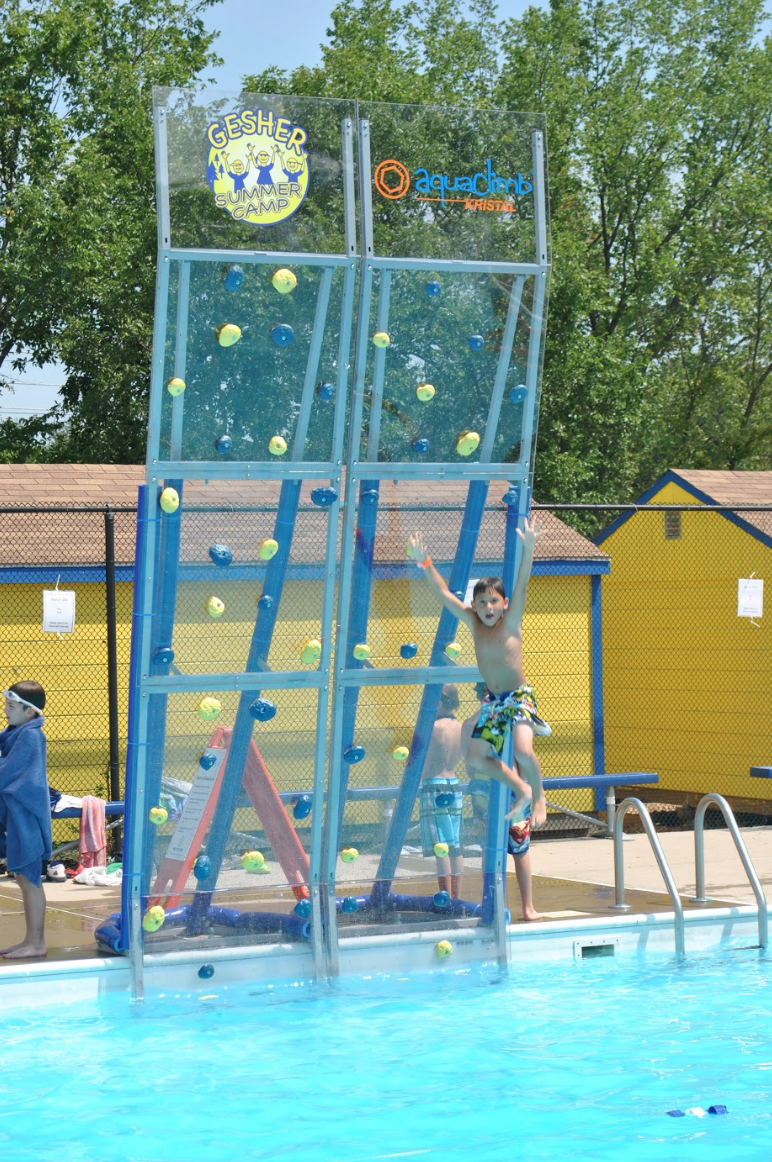
			<content:encoded><![CDATA[<p><a href="http://aquaclimb.com/blog/wp-content/uploads/2012/04/krystal_01_sm1.jpg"><img class="aligncenter size-medium wp-image-89" title="krystal_01_sm" src="http://aquaclimb.com/blog/wp-content/uploads/2012/04/krystal_01_sm1-300x225.jpg" alt="" width="300" height="225" /></a></p>
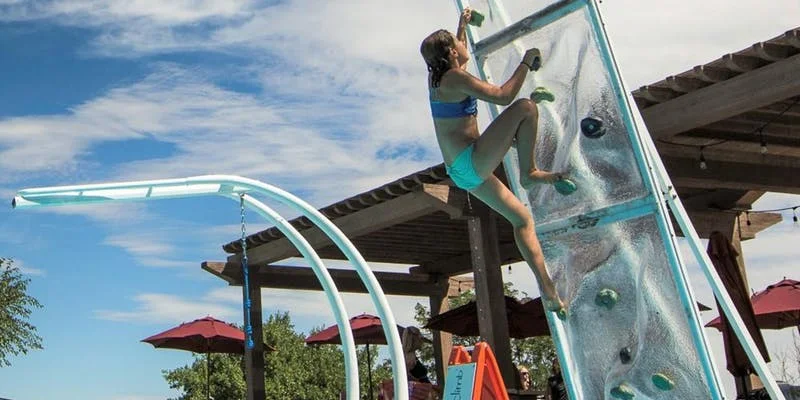
<p>&#8220;Just installed my first AquaClimb and it was very easy to install and it looks fantastic! Everybody that has came by the pool are so excited and thinks it looks great! The kids I’m sure will have a blast this summer using it!&#8221;<br />
- Orvil Maples, pool manager, City of Aurora, Missouri</p>
<p><a href="http://aquaclimb.com/blog/wp-content/uploads/2012/04/krystal_03_sm.jpg"><img class="aligncenter size-medium wp-image-90" title="krystal_03_sm" src="http://aquaclimb.com/blog/wp-content/uploads/2012/04/krystal_03_sm-300x225.jpg" alt="" width="300" height="225" /></a></p>
]]></content:encoded>
			<wfw:commentRss>http://aquaclimb.com/blog/?feed=rss2&#038;p=87</wfw:commentRss>
		<slash:comments>0</slash:comments>
		</item>
		<item>
		<title>AquaClimb&#174; Links and Information</title>
		<link>http://aquaclimb.com/blog/?p=77</link>
		<comments>http://aquaclimb.com/blog/?p=77#comments</comments>
		<pubDate>Tue, 28 Feb 2012 07:17:57 +0000</pubDate>
		<dc:creator>aquaclimbusa</dc:creator>
				<category><![CDATA[Uncategorized]]></category>

		<guid isPermaLink="false">http://aquaclimb.com/blog/?p=77</guid>
		<description><![CDATA[AquaClimb&#8217;s® Links and Information page brings you the latest buzz about AquaClimb® on the web. City of Lafayette &#8211; The New AquaClimb has arrived at the Burger Recreation Center&#8230; If the new outdoor adult-only hot tub and toddler dolphin slide &#8230; <a href="http://aquaclimb.com/blog/?p=77">Continue reading <span class="meta-nav">&#8594;</span></a>]]></description>
			<content:encoded><![CDATA[<p>AquaClimb&#8217;s® Links and Information page brings you the latest buzz about AquaClimb® on the web.</p>
<hr />
<p><a href="www.cityoflafayette.com/News.asp?NewsID=2629" target="_new">City of Lafayette &#8211; The New AquaClimb has arrived at the Burger Recreation Center&#8230;</a><br />
If the new outdoor adult-only hot tub and toddler dolphin slide weren&#8217;t enough to send you into the deep end, our new aquatic climbing wall will! The new &#8230;<br />
<a href="www.cityoflafayette.com/News.asp?NewsID=2629" target="_new">www.cityoflafayette.com/News.asp?NewsID=2629</a></p>
<hr />
<p><a href="http://www.coloradohometownweekly.com/news/lafayette/ci_19912953?IADID=Search-www.coloradohometownweekly.com-www.coloradohometownweekly.com" target="_blank">Aquatic climbing wall coming to Lafayette</a><br />
Lafayette Recreation Department officials plan to install a new climbing wall at the Bob L. Burger Recreation Center later this month. But they have no intentions of allowing climbers to use ropes, harnesses and caribiners to scale the 12-foot inverted wall.<br />
<a href="http://www.coloradohometownweekly.com/news/lafayette/ci_19912953?IADID=Search-www.coloradohometownweekly.com-www.coloradohometownweekly.com" target="_blank">More&#8230;</a></p>
<hr />
<p><a href="http://www.google.com/url?sa=X&amp;q=http://www.trendhunter.com/trends/aquaclimb-sport&amp;ct=ga&amp;cad=CAcQAhgAIAEoATAAOABA1PSp-gRIAVgAYgJlbg&amp;cd=g94chQi6EEk&amp;usg=AFQjCNFLOx_5cg2apNCcfhdFFcSmHhMucQ" target="_blank">Ascending Pool Adventures (UPDATE) &#8211; The AquaClimb Sport is an &#8230;</a><br />
AquaClimb Sport &#8211; Towering and transparent, the AquaClimb Sport offers a new experience for amateur and professional rock climbers. A sleeker alternative to &#8230;<br />
<a href="http://www.google.com/url?sa=X&amp;q=http://www.trendhunter.com/trends/aquaclimb-sport&amp;ct=ga&amp;cad=CAcQAhgAIAEoBDAAOABA1PSp-gRIAVgAYgJlbg&amp;cd=g94chQi6EEk&amp;usg=AFQjCNFLOx_5cg2apNCcfhdFFcSmHhMucQ" target="_blank">www.trendhunter.com/trends/aquaclimb-sport</a></p>
<hr />
<p><a href="http://www.google.com/url?sa=X&amp;q=http://www.gizmodo.co.uk/tag/aquaclimb-sport/&amp;ct=ga&amp;cad=CAcQAhgAIAEoATABOAFA1PSp-gRIAVgAYgJlbg&amp;cd=g94chQi6EEk&amp;usg=AFQjCNG4XRkMp2KDBe3r_5hGX71ux_bFfQ" target="_blank">aquaclimb sport | Gizmodo UK</a><br />
aquaclimb sport &#8211; Gizmodo and its new offshoot Gizmodo UK arenâ€™t your average tech sites. Sure, we love technology and gadgets, but like any good &#8230;<br />
<a href="http://www.google.com/url?sa=X&amp;q=http://www.gizmodo.co.uk/tag/aquaclimb-sport/&amp;ct=ga&amp;cad=CAcQAhgAIAEoBDABOAFA1PSp-gRIAVgAYgJlbg&amp;cd=g94chQi6EEk&amp;usg=AFQjCNG4XRkMp2KDBe3r_5hGX71ux_bFfQ" target="_blank">www.gizmodo.co.uk/tag/aquaclimb-sport/</a></p>
<hr />
<p><a href="http://www.google.com/url?sa=X&amp;q=http://www.marleymagaziner.com/post/15787764513/citygirlchronicoles-the-aquaclimb-this-looks&amp;ct=ga&amp;cad=CAcQAhgAIAEoATAAOABAnKLL-ARIAVgAYgJlbg&amp;cd=1om1fjVDy6o&amp;usg=AFQjCNEL4PuCy7_EP1UyrZuR8TS_KvGEbQ" target="_blank">citygirlchronicoles: the aquaclimb! This looks&#8230; – Love, lists, and &#8230;</a><br />
<a href="http://www.google.com/url?sa=X&amp;q=http://www.marleymagaziner.com/post/15787764513/citygirlchronicoles-the-aquaclimb-this-looks&amp;ct=ga&amp;cad=CAcQAhgAIAEoBDAAOABAnKLL-ARIAVgAYgJlbg&amp;cd=1om1fjVDy6o&amp;usg=AFQjCNEL4PuCy7_EP1UyrZuR8TS_KvGEbQ" target="_blank">www.marleymagaziner.com/&#8230;/citygirlchronicoles-the-aquacli&#8230;</a></p>
<hr />
<p><a href="http://www.google.com/url?sa=X&amp;q=http://materialicious.com/2012/02/aquaclimb-pool-side-climbing-wall.html&amp;ct=ga&amp;cad=CAcQAhgAIAEoATAAOABAkrGO-gRIAVgAYgJlbg&amp;cd=_hfsQGfAyho&amp;usg=AFQjCNG8hR4ELuAQ3XQa_C5mLkzrx5Fy9Q" target="_blank">AquaClimb &#8211; Pool Side Climbing Wall | materialicious</a><br />
People love water sports whether they are of 6 or 60s with energy left. This is a playful but a little bit expensive sh!t. AquaClimb is offering this wall for JUST &#8230;<br />
<a href="http://www.google.com/url?sa=X&amp;q=http://materialicious.com/2012/02/aquaclimb-pool-side-climbing-wall.html&amp;ct=ga&amp;cad=CAcQAhgAIAEoBDAAOABAkrGO-gRIAVgAYgJlbg&amp;cd=_hfsQGfAyho&amp;usg=AFQjCNG8hR4ELuAQ3XQa_C5mLkzrx5Fy9Q" target="_blank">materialicious.com/&#8230;/aquaclimb-pool-side-climbing-wall.html</a></p>
<hr />
<p><a href="http://www.google.com/url?sa=X&amp;q=http://now.shelterholic.com/2012/02/20/aquaclimb-pool-side-climbing-wall/&amp;ct=ga&amp;cad=CAcQAhgAIAEoATABOAFAkrGO-gRIAVgAYgJlbg&amp;cd=_hfsQGfAyho&amp;usg=AFQjCNHzIIznIvbefHTyC17LN0AlZw-sqQ" target="_blank">AquaClimb &#8211; Pool Side Climbing Wall | Shelterholic Now</a><br />
Shelterholic Now is your source for up-to-the-moment shelter, interior and design news. Our system scours the web for great articles and our editors highlight the &#8230;<br />
<a href="http://www.google.com/url?sa=X&amp;q=http://now.shelterholic.com/2012/02/20/aquaclimb-pool-side-climbing-wall/&amp;ct=ga&amp;cad=CAcQAhgAIAEoBDABOAFAkrGO-gRIAVgAYgJlbg&amp;cd=_hfsQGfAyho&amp;usg=AFQjCNHzIIznIvbefHTyC17LN0AlZw-sqQ" target="_blank">now.shelterholic.com/&#8230;/aquaclimb-pool-side-climbing-wall/</a></p>
<hr />
<p><a href="http://www.google.com/url?sa=X&amp;q=http://www.redferret.net/%3Fp%3D30840&amp;ct=ga&amp;cad=CAcQAhgAIAEoATAAOABAmPeY-gRIAVgAYgJlbg&amp;cd=eJa3wNSctrg&amp;usg=AFQjCNHpOzjwbY4JYQ9AJ5j7AY98XY8PWA" target="_blank">AquaClimb adds a rock wall to your pool &#8211; The Red Ferret Journal</a><br />
Rock climbing seems like one of those overly adventurous sports that is left up to explorers and daredevils. Sure, there are harnesses and things of that nature to &#8230;<br />
<a href="http://www.google.com/url?sa=X&amp;q=http://www.redferret.net/%3Fp%3D30840&amp;ct=ga&amp;cad=CAcQAhgAIAEoBDAAOABAmPeY-gRIAVgAYgJlbg&amp;cd=eJa3wNSctrg&amp;usg=AFQjCNHpOzjwbY4JYQ9AJ5j7AY98XY8PWA" target="_blank">www.redferret.net/?p=30840</a></p>
<hr />
<p><a href="http://www.google.com/url?sa=X&amp;q=http://gizmodo.com/aquaclimb-sport/&amp;ct=ga&amp;cad=CAcQAhgAIAEoATAAOABArZqe-gRIAVgAYgJlbg&amp;cd=ER4vdsynFMU&amp;usg=AFQjCNHRP-kqK7NeNNKkvD9cRsMXY22-DQ" target="_blank">Aquaclimb sport News, Videos, Reviews and Gossip &#8211; Gizmodo</a><br />
You&#8217;ll Splash, Not Crash, When You Fall Off This Climbing Wall.<br />
<a href="http://www.google.com/url?sa=X&amp;q=http://gizmodo.com/aquaclimb-sport/&amp;ct=ga&amp;cad=CAcQAhgAIAEoBDAAOABArZqe-gRIAVgAYgJlbg&amp;cd=ER4vdsynFMU&amp;usg=AFQjCNHRP-kqK7NeNNKkvD9cRsMXY22-DQ" target="_blank">gizmodo.com/aquaclimb-sport/</a></p>
<hr />
<p><a href="http://www.google.com/url?sa=X&amp;q=http://techiefeed.com/tag/aquaclimb-sport/&amp;ct=ga&amp;cad=CAcQAhgAIAEoATABOAFArZqe-gRIAVgAYgJlbg&amp;cd=ER4vdsynFMU&amp;usg=AFQjCNE1r37SmAN1fTeNFCPvPbOBG7Dbzg" target="_blank">AquaClimb Sport | techie feeds</a><br />
Tag Archives: AquaClimb Sport. You&#8217;ll Splash, Instead Of Crash, When You Fall Off This Climbing Wall [Fitness]. Posted on February 23, 2012 by Andrew &#8230;<br />
<a href="http://www.google.com/url?sa=X&amp;q=http://techiefeed.com/tag/aquaclimb-sport/&amp;ct=ga&amp;cad=CAcQAhgAIAEoBDABOAFArZqe-gRIAVgAYgJlbg&amp;cd=ER4vdsynFMU&amp;usg=AFQjCNE1r37SmAN1fTeNFCPvPbOBG7Dbzg" target="_blank">techiefeed.com/tag/aquaclimb-sport/</a></p>
<hr />
<p><a href="http://www.google.com/url?sa=X&amp;q=http://www.designbuzz.com/aquaclimb-watery-excursion-daredevils-explorers.html&amp;ct=ga&amp;cad=CAcQAhgAIAEoATAAOABAlIOu-gRIAVgAYgJlbg&amp;cd=CTZxtvaSjpU&amp;usg=AFQjCNFBHjlupzoHnE7qYcrVYs14NzvZPA" target="_blank">AquaClimb, a watery excursion for daredevils and explorers</a><br />
Rock climbing is one exciting sport and its indoor version is all the more fun and safe. There is a range of rock climbing artificial walls and giving it an all new &#8230;<br />
<a href="http://www.google.com/url?sa=X&amp;q=http://www.designbuzz.com/aquaclimb-watery-excursion-daredevils-explorers.html&amp;ct=ga&amp;cad=CAcQAhgAIAEoBDAAOABAlIOu-gRIAVgAYgJlbg&amp;cd=CTZxtvaSjpU&amp;usg=AFQjCNFBHjlupzoHnE7qYcrVYs14NzvZPA" target="_blank">www.designbuzz.com/aquaclimb-watery-excursion-daredevils&#8230;</a></p>
]]></content:encoded>
			<wfw:commentRss>http://aquaclimb.com/blog/?feed=rss2&#038;p=77</wfw:commentRss>
		<slash:comments>0</slash:comments>
		</item>
		<item>
		<title>BREAKING NEWS HAPPENING NOW-Installation of the Largest AquaClimb Sport in North America!</title>
		<link>http://aquaclimb.com/blog/?p=64</link>
		<comments>http://aquaclimb.com/blog/?p=64#comments</comments>
		<pubDate>Tue, 20 Dec 2011 18:09:22 +0000</pubDate>
		<dc:creator>aquaclimbusa</dc:creator>
				<category><![CDATA[Uncategorized]]></category>

		<guid isPermaLink="false">http://aquaclimb.com/blog/?p=64</guid>
		<description><![CDATA[Click on the images for a larger view AquaClimb is currently installing the largest AquaClimb Sport in North America at the Northern Alberta Institute of Technology in Edmonton, Alberta.  This installation is a feat of engineering prowess as the unit &#8230; <a href="http://aquaclimb.com/blog/?p=64">Continue reading <span class="meta-nav">&#8594;</span></a>]]></description>
			<content:encoded><![CDATA[<div style="float: right; text-align: center; padding-left: 5px; padding-right: 0px; padding-top: 0px; padding-bottom: 5px; font-size: 10pt; font-color: #000000;">
<p>Click on the images for a larger view<br />
<a href="http://www.aquaclimb.com/images/content/001.jpg" target="_blank"><img src="http://www.aquaclimb.com/images/content/001sm.jpg" alt="Entering through the double doors." /></a></p>
<p><a href="http://www.aquaclimb.com/images/content/002.jpg" target="_blank"><img src="http://www.aquaclimb.com/images/content/002sm.jpg" alt="6" /></a></p>
<p><a href="http://www.aquaclimb.com/images/content/003.jpg" target="_blank"><img src="http://www.aquaclimb.com/images/content/003sm.jpg" alt="6" /></a></p>
</div>
<p>AquaClimb is currently installing the largest <em>AquaClimb Sport</em> in North America at the <em>Northern Alberta Institute of Technology</em> in Edmonton, Alberta.  This installation is a feat of engineering prowess as the unit must be conveyed into the building through a set of exterior double doors before being transported down two flights of stairs to reach its final installation area inside the building.</p>
<p>The endeavor is going well and we will be posting pictures of the progress as it continues.  Check back often to see the step by step process of this challenging and rewarding achievement.</p>
<p><strong>UPDATE (Tuesday: 1:31pm EST):</strong> The <em>AquaClimb Sport</em> is now inside the building and down the stairs (see photos).</p>
<p><strong>UPDATE (Wednesday: 11:40am EST):</strong> The <em>AquaClimb Sport</em> is being aligned into position.</p>
<p><strong>UPDATE (Wednesday: 12:21pm EST):</strong> The <em>AquaClimb Sport</em> gets lowered into the pool.</p>
<p><strong>UPDATE (Wednesday: 12:25pm EST):</strong> The <em>AquaClimb Sport</em> is prepared to get attached to the pool wall.</p>
<p><strong>UPDATE (Wednesday: 12:25pm EST):</strong> The <em>AquaClimb Sport</em> being floated into position with an airbag.</p>
<p><strong>UPDATE (Wednesday: 12:55pm EST):</strong> The <em>AquaClimb Sport</em> is brought into attachment position.</p>
<p><strong>UPDATE (Thursday: 2:12pm EST):</strong> Cranes raise the <em>AquaClimb Sport</em> in its upright position.</p>
<p><strong>UPDATE (Thursday: 4:51pm EST):</strong> The poolside attachment process begins.</p>
<p><strong>UPDATE (Thursday: 5:52pm EST): DONE!</strong>  The only thing left to do is remove the cranes.</p>
<div style="float: left; width: 50%; text-align: center;"><a href="http://www.aquaclimb.com/images/content/005.jpg" target="_blank"><img src="http://www.aquaclimb.com/images/content/005sm.jpg" alt="Preparing to bring it down the stairs" /></a></div>
<div style="float: left; width: 50%; text-align: center;"><a href="http://www.aquaclimb.com/images/content/006.jpg" target="_blank"><img src="http://www.aquaclimb.com/images/content/006sm.jpg" alt="6" /></a></div>
<p>&nbsp;</p>
<div style="float: left; width: 50%; text-align: center;"><a href="http://www.aquaclimb.com/images/content/007.jpg" target="_blank"><img src="http://www.aquaclimb.com/images/content/007sm.jpg" alt="Preparing to bring it down the stairs" /></a></div>
<div style="float: left; width: 50%; text-align: center;"><a href="http://www.aquaclimb.com/images/content/008.jpg" target="_blank"><img src="http://www.aquaclimb.com/images/content/008sm.jpg" alt="" /></a></div>
<p>&nbsp;</p>
<div style="float: left; width: 50%; text-align: center;"><a href="http://www.aquaclimb.com/images/content/009.jpg" target="_blank"><img src="http://www.aquaclimb.com/images/content/009sm.jpg" alt="" /></a></div>
<div style="float: left; width: 50%; text-align: center;"><a href="http://www.aquaclimb.com/images/content/010.jpg" target="_blank"><img src="http://www.aquaclimb.com/images/content/010sm.jpg" alt="" /></a></div>
<p>&nbsp;</p>
<div style="float: left; width: 50%; text-align: center;"><a href="http://www.aquaclimb.com/images/content/0011.jpg" target="_blank"><img src="http://www.aquaclimb.com/images/content/011smsm.jpg" alt="" /></a></div>
<div style="float: left; width: 50%; text-align: center;"><a href="http://www.aquaclimb.com/images/content/012.jpg" target="_blank"><img src="http://www.aquaclimb.com/images/content/012sm.jpg" alt="" /></a></div>
<p>&nbsp;</p>
<div style="float: left; width: 50%; text-align: center;"><a href="http://www.aquaclimb.com/images/content/013.jpg" target="_blank"><img src="http://www.aquaclimb.com/images/content/013sm.jpg" alt="" /></a></div>
<p>&nbsp;</p>
]]></content:encoded>
			<wfw:commentRss>http://aquaclimb.com/blog/?feed=rss2&#038;p=64</wfw:commentRss>
		<slash:comments>0</slash:comments>
		</item>
		<item>
		<title>TOP SECRET &#8211; Santa&#8217;s NEW Training Tool</title>
		<link>http://aquaclimb.com/blog/?p=57</link>
		<comments>http://aquaclimb.com/blog/?p=57#comments</comments>
		<pubDate>Mon, 19 Dec 2011 12:32:41 +0000</pubDate>
		<dc:creator>aquaclimbusa</dc:creator>
				<category><![CDATA[Uncategorized]]></category>

		<guid isPermaLink="false">http://aquaclimb.com/blog/?p=57</guid>
		<description><![CDATA[He will be more fit, stronger and bolder delivering gifts this Christmas!]]></description>
			<content:encoded><![CDATA[<div style="float: right; padding: 5px;"><img src="http://www.aquaclimb.com/images/content/santaclimbs.jpg" alt="Santa's NEW Training Regimen" /></div>
<p>He will be more fit, stronger and bolder delivering gifts this Christmas!</p>
]]></content:encoded>
			<wfw:commentRss>http://aquaclimb.com/blog/?feed=rss2&#038;p=57</wfw:commentRss>
		<slash:comments>0</slash:comments>
		</item>
		<item>
		<title>Meet Doug Cooke</title>
		<link>http://aquaclimb.com/blog/?p=54</link>
		<comments>http://aquaclimb.com/blog/?p=54#comments</comments>
		<pubDate>Tue, 13 Dec 2011 08:37:43 +0000</pubDate>
		<dc:creator>aquaclimbusa</dc:creator>
				<category><![CDATA[Uncategorized]]></category>

		<guid isPermaLink="false">http://aquaclimb.com/blog/?p=54</guid>
		<description><![CDATA[AquaClimb is hiring GREAT PEOPLE and on that note we welcome Mr. Doug Cooke to the AquaClimb team. He joins us and has been given the illustriously long title of&#8230; &#8220;Direct Sales and Customer Service Manager for North America&#8221;. The &#8230; <a href="http://aquaclimb.com/blog/?p=54">Continue reading <span class="meta-nav">&#8594;</span></a>]]></description>
			<content:encoded><![CDATA[<div style="float: right; padding: 5px;"><img src="http://www.aquaclimb.com/images/content/doug_cooke.jpg" alt="Mr. Doug Cooke" /></div>
<p>AquaClimb is hiring GREAT PEOPLE and on that note we welcome Mr. Doug Cooke to the AquaClimb team. He joins us and has been given the illustriously long title of&#8230; &#8220;Direct Sales and Customer Service Manager for North America&#8221;. The title says it all really well. Doug is probably the first person customers will be directed to for all inquiries relating to the purchasing of an AquaClimb product. We welcome him to AquaClimb and wish him all the success in building strong relationships with our existing customers and forging new relationships with future customers.</p>
]]></content:encoded>
			<wfw:commentRss>http://aquaclimb.com/blog/?feed=rss2&#038;p=54</wfw:commentRss>
		<slash:comments>1</slash:comments>
		</item>
		<item>
		<title>Aqua Rock Wall Adds Splash of Fun to Lehi Outdoor Pool</title>
		<link>http://aquaclimb.com/blog/?p=43</link>
		<comments>http://aquaclimb.com/blog/?p=43#comments</comments>
		<pubDate>Thu, 08 Dec 2011 18:22:26 +0000</pubDate>
		<dc:creator>aquaclimbusa</dc:creator>
				<category><![CDATA[Uncategorized]]></category>

		<guid isPermaLink="false">http://aquaclimb.com/blog/?p=43</guid>
		<description><![CDATA[By Spenser Heaps &#8211; Daily Herald &#124; Posted: Sunday, August 14, 2011 12:35 am Click HERE to read this article in its original context. Michael Irey climbs while Javas Campbell jumps from the top of the climbing wall at the &#8230; <a href="http://aquaclimb.com/blog/?p=43">Continue reading <span class="meta-nav">&#8594;</span></a>]]></description>
			<content:encoded><![CDATA[<p><font size="-1">By Spenser Heaps &#8211; Daily Herald | Posted: Sunday, August 14, 2011 12:35 am</font><br />
Click <a href="http://www.heraldextra.com/news/local/north/lehi/article_8db6a8d4-24dd-53dc-a506-a2a4bc7f1d3a.html" target="_blank">HERE</a> to read this article in its original context.</p>
<div style="line-height: 1; width: 300px; float: right; border: 1px; border-style: solid; border-color: #ffffff; padding: 5px;">
<img src="http://www.aquaclimb.com/images/content/aquaclimb_jump.jpg" alt="" /><br />
<font size="-1">Michael Irey climbs while Javas Campbell jumps from the top of the climbing wall at the Lehi Outdoor Pool on Saturday, August 13, 2011.</font>
</div>
<p>After losing its water slide to persistent maintenance issues, the Lehi Outdoor Pool needed to add something to keep the kids entertained this summer. The solution: the aqua rock wall. Two climbing walls rise out of the water on the edge of the pool, allowing kids to climb to the top and then jump off.</p>
<p>The overhanging walls lean out over the water, so people young and old can try their hand at rock climbing in a safe environment. A fall means an easy drop into the cool water below. The taller wall is less than the height of the high diving board.</p>
<p>&#8220;I think it&#8217;s way fun,&#8221; said 14-year-old Michael Irey. &#8220;It adds something different to this pool.&#8221;</p>
<p>Head lifeguard Hunter Buxton said the rock walls have been a big hit, though they have added a bit of a challenge for the guards.</p>
<p>&#8220;It&#8217;s a little more hectic with the walls,&#8221; he said. &#8220;But it has brought more people here. Kids big and small all seem to have a lot of fun.&#8221;</p>
<p>He said the lifeguards need to be a little more vigilant to keep the kids from swimming under the wall where a climber could fall on them, but that there haven&#8217;t been any incidents.</p>
]]></content:encoded>
			<wfw:commentRss>http://aquaclimb.com/blog/?feed=rss2&#038;p=43</wfw:commentRss>
		<slash:comments>0</slash:comments>
		</item>
		<item>
		<title>Gulf Shores Recreation Center Open House Nov. 5 &#8211; Residents can use facility free for a day</title>
		<link>http://aquaclimb.com/blog/?p=25</link>
		<comments>http://aquaclimb.com/blog/?p=25#comments</comments>
		<pubDate>Wed, 26 Oct 2011 23:01:22 +0000</pubDate>
		<dc:creator>aquaclimbusa</dc:creator>
				<category><![CDATA[Uncategorized]]></category>

		<guid isPermaLink="false">http://aquaclimb.com/blog/?p=25</guid>
		<description><![CDATA[By JOHN MULLEN theislander@gulfcoastnewspapers.com (Created: Tuesday, October 25, 2011 2:36 PM CDT) Article available in original context HERE. &#160; GULF SHORES, Ala. &#8212; After almost a year of making improvements to the Bodenhamer Recreation Center, the City of Gulf Shores &#8230; <a href="http://aquaclimb.com/blog/?p=25">Continue reading <span class="meta-nav">&#8594;</span></a>]]></description>
			<content:encoded><![CDATA[<div style="font-size: 10pt; line-height: 1.3;">By JOHN MULLEN<br />
<a href="mailto:theislander@gulfcoastnewspapers.com">theislander@gulfcoastnewspapers.com</a><br clear="all" /> (Created: Tuesday, October 25, 2011 2:36 PM CDT)<br />
Article available in original context <a title="Gulf Shores Recreation Center Open House Nov. 5" href="http://www.baldwincountynow.com/articles/2011/10/25/go_and_do/doc4ea70ee6ea2e0495384878.txt">HERE</a>.</div>
<p>&nbsp;</p>
<p>GULF SHORES, Ala. &#8212; After almost a year of making improvements to the Bodenhamer Recreation Center, the City of Gulf Shores is inviting the public enjoy free access to the facility on Nov. 5.</p>
<div style="float: right; text-align: center; line-height: 1; width: 300px; padding: 5px;"><img src="http://www.baldwincountynow.com/content/articles/2011/10/25/go_and_do/doc4ea70ee6ea2e0495384878.jpg" alt="" width="300" border="1" /><br />
<span style="font-size: 10pt;">Brook Monroe Hopkins stands by the aqua climb. Staff photos by John Mullen</span></div>
<p>One of the most unique improvements and additions is the aqua climbing wall at the inside pool in the area where the diving board used to be.</p>
<p>“It’s actually sparked some interest,” Aquatics Director Brook MonroeHopkins said of the climbing wall. “We’re going to have an open, free pool day. Anybody that wants to come, we’ve got new lane lines, we’ve got a basketball goal down there now for people to play and we got new lounge chairs. We’re kind of showing off, get everybody in there to try the aqua climb. “</p>
<p>With the opportunity to try the wall for free, MonroeHopkins believes patrons will want to try it again.</p>
<p>“We’re trying to spark that by having a couple of things for them to actually do,” she said. “ Hopefully they’ll come back.”</p>
<p>Director of Recreation and Cultural Affairs Grant Brown says MonroeHopkins was “instrumental” in getting the rock wall for the pool.</p>
<div style="float: right; text-align: center; line-height: 1; width: 300px; padding: 5px;">
<img src="http://www.baldwincountynow.com/content/articles/2011/10/25/go_and_do/doc4ea70ee6ea2e04953848781.jpg" width="300" border="1" alt="" /><br />
<span style="font-size: 10pt;">A water aerobics class works out in front of the aqua climb wall.</span></div>
<p>“It’s got hand-holds and grips for your hands and feet and you climb the wall,” Brown said. “When you get to the top you jump off the wall into the pool. The kids are loving it.”</p>
<p>The city took out the diving boards which are becoming less common in recreational pools. Brown says there are many issues with the boards.</p>
<p>MonroeHopkins saw one of the walls in Pensacola during a swim meet and the team members immediately took to the wall.</p>
<p>“There was one over there and our children on our swim when they go over there, they love it,” she said. “So I started doing some research and I do know that of the 178 pools that have put them in, they have had a 23 percent increase in patrons.”</p>
<p>Which is something she wants to see happen at the Bodenhamer pool.</p>
<p>“It’ll hit the group we need to hit here,” she said. “We already have water aerobics classes and our swim team. We need young adults, we need teens, late teens. There’s been dads going up it.&#8221;</p>
<p>Lifeguard supervisor David Lloyd hopes the wall brings a new type of patron to the pool.</p>
<p>“We program a lot of things here, we just don’t have a lot of walk-in traffic of people that just want to come play and swim,” he said. “We don’t see that anymore.”</p>
<p>The wall has a few rules to keep folks safe. The kids line up on each side of it and only two can be on the wall at a time. They are supervised by lifeguards to make sure no one is underneath them when they begin climbing.</p>
<p>“When we started looking at renovations to our existing facilities, which we’re going quite a bit of now, that was one of the things she really wanted to put in,” Brown said of MonroeHopkins. “Something new, something exciting, something the kids could really relate to. And adults, too. I don’t see adults using it a whole bunch, but it’s definitely been covered up with kids since we put it in.&#8221;</p>
<p>The wall is composed of 16 one meter squares and each square has five grips on each one.</p>
<p>“About 15 percent of the people who climb it can make it to the top,” Lloyd said</p>
<p>“A lot of them try more than once and they get up there,” MonroeHopkins said.</p>
]]></content:encoded>
			<wfw:commentRss>http://aquaclimb.com/blog/?feed=rss2&#038;p=25</wfw:commentRss>
		<slash:comments>0</slash:comments>
		</item>
		<item>
		<title>Children&#8217;s Risky Play from an Evolutionary Perspective: The Anti-Phobic  Effects of Thrilling Experiences</title>
		<link>http://aquaclimb.com/blog/?p=20</link>
		<comments>http://aquaclimb.com/blog/?p=20#comments</comments>
		<pubDate>Fri, 09 Sep 2011 02:47:18 +0000</pubDate>
		<dc:creator>aquaclimbusa</dc:creator>
				<category><![CDATA[Uncategorized]]></category>

		<guid isPermaLink="false">http://aquaclimb.com/blog/?p=20</guid>
		<description><![CDATA[Ellen Beate Hansen Sandseter, Department of Physical Education, Queen Maud University College of Early Childhood Education (DMMH), Trondheim, Norway. E-mail: ebs@dmmh.no (Corresponding author).1 Leif Edward Ottesen Kennair, Department of Psychology, Norwegian University of Science and Technology (NTNU), Trondheim, Norway. Abstract: &#8230; <a href="http://aquaclimb.com/blog/?p=20">Continue reading <span class="meta-nav">&#8594;</span></a>]]></description>
			<content:encoded><![CDATA[<p>Ellen Beate Hansen Sandseter, Department of Physical Education, Queen Maud University College of Early Childhood Education (DMMH), Trondheim, Norway. E-mail: ebs@dmmh.no (Corresponding author).1</p>
<p>Leif Edward Ottesen Kennair, Department of Psychology, Norwegian University of Science and Technology (NTNU), Trondheim, Norway.</p>
<p><strong>Abstract:</strong> This theoretical art icle views children’s risky play from an evolutionary perspective, addressing specific evolutionary functions and especially the anti-phobic effects of risky play. According to the non-associative theory, a contemporary approach to the etiology of anxiety, children develop fears of certain stimuli (e.g., heights and strangers) that protect them from situations they are not mature enough to cope with, naturally through infancy. Risky play is a set of motivated behaviors that both provide the child with an exhilarating positive emotion and expose the child to the stimuli they previously have feared. As the child’s coping skills improve, these situations and stimuli may be mastered and no longer be feared. Thus fear caused by maturational and age relevant natural inhibit ion is reduced as the child experiences a motivating thrilling activation, while learning to master age adequate challenges. It is concluded that risky play may have evolved due to this anti-phobic effect in normal child development, and it is suggested that we may observe an increased neuroticism or psychopathology in society if children are hindered from partaking in age adequate risky play.</p>
<p><!--[if gte mso 9]><xml><br />
<w:WordDocument><br />
<w:View>Normal</w:View><br />
<w:Zoom>0</w:Zoom><br />
<w:TrackMoves/><br />
<w:TrackFormatting/><br />
<w:PunctuationKerning/><br />
<w:ValidateAgainstSchemas/><br />
<w:SaveIfXMLInvalid>false</w:SaveIfXMLInvalid><br />
<w:IgnoreMixedContent>false</w:IgnoreMixedContent><br />
<w:AlwaysShowPlaceholderText>false</w:AlwaysShowPlaceholderText><br />
<w:DoNotPromoteQF/><br />
<w:LidThemeOther>EN-US</w:LidThemeOther><br />
<w:LidThemeAsian>X-NONE</w:LidThemeAsian><br />
<w:LidThemeComplexScript>X-NONE</w:LidThemeComplexScript><br />
<w:Compatibility><br />
<w:BreakWrappedTables/><br />
<w:SnapToGridInCell/><br />
<w:WrapTextWithPunct/><br />
<w:UseAsianBreakRules/><br />
<w:DontGrowAutofit/><br />
<w:SplitPgBreakAndParaMark/><br />
<w:DontVertAlignCellWithSp/><br />
<w:DontBreakConstrainedForcedTables/><br />
<w:DontVertAlignInTxbx/><br />
<w:Word11KerningPairs/><br />
<w:CachedColBalance/><br />
</w:Compatibility><br />
<w:BrowserLevel>MicrosoftInternetExplorer4</w:BrowserLevel><br />
<m:mathPr><br />
<m:mathFont m:val="Cambria Math"/><br />
<m:brkBin m:val="before"/><br />
<m:brkBinSub m:val="&#45;-"/><br />
<m:smallFrac m:val="off"/><br />
<m:dispDef/><br />
<m:lMargin m:val="0"/><br />
<m:rMargin m:val="0"/><br />
<m:defJc m:val="centerGroup"/><br />
<m:wrapIndent m:val="1440"/><br />
<m:intLim m:val="subSup"/><br />
<m:naryLim m:val="undOvr"/><br />
</m:mathPr></w:WordDocument><br />
</xml><![endif]--><!--[if gte mso 9]><xml><br />
<w:LatentStyles DefLockedState="false" DefUnhideWhenUsed="true"<br />
DefSemiHidden="true" DefQFormat="false" DefPriority="99"<br />
LatentStyleCount="267"><br />
<w:LsdException Locked="false" Priority="0" SemiHidden="false"<br />
UnhideWhenUsed="false" QFormat="true" Name="Normal"/><br />
<w:LsdException Locked="false" Priority="9" SemiHidden="false"<br />
UnhideWhenUsed="false" QFormat="true" Name="heading 1"/><br />
<w:LsdException Locked="false" Priority="9" QFormat="true" Name="heading 2"/><br />
<w:LsdException Locked="false" Priority="9" QFormat="true" Name="heading 3"/><br />
<w:LsdException Locked="false" Priority="9" QFormat="true" Name="heading 4"/><br />
<w:LsdException Locked="false" Priority="9" QFormat="true" Name="heading 5"/><br />
<w:LsdException Locked="false" Priority="9" QFormat="true" Name="heading 6"/><br />
<w:LsdException Locked="false" Priority="9" QFormat="true" Name="heading 7"/><br />
<w:LsdException Locked="false" Priority="9" QFormat="true" Name="heading 8"/><br />
<w:LsdException Locked="false" Priority="9" QFormat="true" Name="heading 9"/><br />
<w:LsdException Locked="false" Priority="39" Name="toc 1"/><br />
<w:LsdException Locked="false" Priority="39" Name="toc 2"/><br />
<w:LsdException Locked="false" Priority="39" Name="toc 3"/><br />
<w:LsdException Locked="false" Priority="39" Name="toc 4"/><br />
<w:LsdException Locked="false" Priority="39" Name="toc 5"/><br />
<w:LsdException Locked="false" Priority="39" Name="toc 6"/><br />
<w:LsdException Locked="false" Priority="39" Name="toc 7"/><br />
<w:LsdException Locked="false" Priority="39" Name="toc 8"/><br />
<w:LsdException Locked="false" Priority="39" Name="toc 9"/><br />
<w:LsdException Locked="false" Priority="35" QFormat="true" Name="caption"/><br />
<w:LsdException Locked="false" Priority="10" SemiHidden="false"<br />
UnhideWhenUsed="false" QFormat="true" Name="Title"/><br />
<w:LsdException Locked="false" Priority="1" Name="Default Paragraph Font"/><br />
<w:LsdException Locked="false" Priority="11" SemiHidden="false"<br />
UnhideWhenUsed="false" QFormat="true" Name="Subtitle"/><br />
<w:LsdException Locked="false" Priority="22" SemiHidden="false"<br />
UnhideWhenUsed="false" QFormat="true" Name="Strong"/><br />
<w:LsdException Locked="false" Priority="20" SemiHidden="false"<br />
UnhideWhenUsed="false" QFormat="true" Name="Emphasis"/><br />
<w:LsdException Locked="false" Priority="59" SemiHidden="false"<br />
UnhideWhenUsed="false" Name="Table Grid"/><br />
<w:LsdException Locked="false" UnhideWhenUsed="false" Name="Placeholder Text"/><br />
<w:LsdException Locked="false" Priority="1" SemiHidden="false"<br />
UnhideWhenUsed="false" QFormat="true" Name="No Spacing"/><br />
<w:LsdException Locked="false" Priority="60" SemiHidden="false"<br />
UnhideWhenUsed="false" Name="Light Shading"/><br />
<w:LsdException Locked="false" Priority="61" SemiHidden="false"<br />
UnhideWhenUsed="false" Name="Light List"/><br />
<w:LsdException Locked="false" Priority="62" SemiHidden="false"<br />
UnhideWhenUsed="false" Name="Light Grid"/><br />
<w:LsdException Locked="false" Priority="63" SemiHidden="false"<br />
UnhideWhenUsed="false" Name="Medium Shading 1"/><br />
<w:LsdException Locked="false" Priority="64" SemiHidden="false"<br />
UnhideWhenUsed="false" Name="Medium Shading 2"/><br />
<w:LsdException Locked="false" Priority="65" SemiHidden="false"<br />
UnhideWhenUsed="false" Name="Medium List 1"/><br />
<w:LsdException Locked="false" Priority="66" SemiHidden="false"<br />
UnhideWhenUsed="false" Name="Medium List 2"/><br />
<w:LsdException Locked="false" Priority="67" SemiHidden="false"<br />
UnhideWhenUsed="false" Name="Medium Grid 1"/><br />
<w:LsdException Locked="false" Priority="68" SemiHidden="false"<br />
UnhideWhenUsed="false" Name="Medium Grid 2"/><br />
<w:LsdException Locked="false" Priority="69" SemiHidden="false"<br />
UnhideWhenUsed="false" Name="Medium Grid 3"/><br />
<w:LsdException Locked="false" Priority="70" SemiHidden="false"<br />
UnhideWhenUsed="false" Name="Dark List"/><br />
<w:LsdException Locked="false" Priority="71" SemiHidden="false"<br />
UnhideWhenUsed="false" Name="Colorful Shading"/><br />
<w:LsdException Locked="false" Priority="72" SemiHidden="false"<br />
UnhideWhenUsed="false" Name="Colorful List"/><br />
<w:LsdException Locked="false" Priority="73" SemiHidden="false"<br />
UnhideWhenUsed="false" Name="Colorful Grid"/><br />
<w:LsdException Locked="false" Priority="60" SemiHidden="false"<br />
UnhideWhenUsed="false" Name="Light Shading Accent 1"/><br />
<w:LsdException Locked="false" Priority="61" SemiHidden="false"<br />
UnhideWhenUsed="false" Name="Light List Accent 1"/><br />
<w:LsdException Locked="false" Priority="62" SemiHidden="false"<br />
UnhideWhenUsed="false" Name="Light Grid Accent 1"/><br />
<w:LsdException Locked="false" Priority="63" SemiHidden="false"<br />
UnhideWhenUsed="false" Name="Medium Shading 1 Accent 1"/><br />
<w:LsdException Locked="false" Priority="64" SemiHidden="false"<br />
UnhideWhenUsed="false" Name="Medium Shading 2 Accent 1"/><br />
<w:LsdException Locked="false" Priority="65" SemiHidden="false"<br />
UnhideWhenUsed="false" Name="Medium List 1 Accent 1"/><br />
<w:LsdException Locked="false" UnhideWhenUsed="false" Name="Revision"/><br />
<w:LsdException Locked="false" Priority="34" SemiHidden="false"<br />
UnhideWhenUsed="false" QFormat="true" Name="List Paragraph"/><br />
<w:LsdException Locked="false" Priority="29" SemiHidden="false"<br />
UnhideWhenUsed="false" QFormat="true" Name="Quote"/><br />
<w:LsdException Locked="false" Priority="30" SemiHidden="false"<br />
UnhideWhenUsed="false" QFormat="true" Name="Intense Quote"/><br />
<w:LsdException Locked="false" Priority="66" SemiHidden="false"<br />
UnhideWhenUsed="false" Name="Medium List 2 Accent 1"/><br />
<w:LsdException Locked="false" Priority="67" SemiHidden="false"<br />
UnhideWhenUsed="false" Name="Medium Grid 1 Accent 1"/><br />
<w:LsdException Locked="false" Priority="68" SemiHidden="false"<br />
UnhideWhenUsed="false" Name="Medium Grid 2 Accent 1"/><br />
<w:LsdException Locked="false" Priority="69" SemiHidden="false"<br />
UnhideWhenUsed="false" Name="Medium Grid 3 Accent 1"/><br />
<w:LsdException Locked="false" Priority="70" SemiHidden="false"<br />
UnhideWhenUsed="false" Name="Dark List Accent 1"/><br />
<w:LsdException Locked="false" Priority="71" SemiHidden="false"<br />
UnhideWhenUsed="false" Name="Colorful Shading Accent 1"/><br />
<w:LsdException Locked="false" Priority="72" SemiHidden="false"<br />
UnhideWhenUsed="false" Name="Colorful List Accent 1"/><br />
<w:LsdException Locked="false" Priority="73" SemiHidden="false"<br />
UnhideWhenUsed="false" Name="Colorful Grid Accent 1"/><br />
<w:LsdException Locked="false" Priority="60" SemiHidden="false"<br />
UnhideWhenUsed="false" Name="Light Shading Accent 2"/><br />
<w:LsdException Locked="false" Priority="61" SemiHidden="false"<br />
UnhideWhenUsed="false" Name="Light List Accent 2"/><br />
<w:LsdException Locked="false" Priority="62" SemiHidden="false"<br />
UnhideWhenUsed="false" Name="Light Grid Accent 2"/><br />
<w:LsdException Locked="false" Priority="63" SemiHidden="false"<br />
UnhideWhenUsed="false" Name="Medium Shading 1 Accent 2"/><br />
<w:LsdException Locked="false" Priority="64" SemiHidden="false"<br />
UnhideWhenUsed="false" Name="Medium Shading 2 Accent 2"/><br />
<w:LsdException Locked="false" Priority="65" SemiHidden="false"<br />
UnhideWhenUsed="false" Name="Medium List 1 Accent 2"/><br />
<w:LsdException Locked="false" Priority="66" SemiHidden="false"<br />
UnhideWhenUsed="false" Name="Medium List 2 Accent 2"/><br />
<w:LsdException Locked="false" Priority="67" SemiHidden="false"<br />
UnhideWhenUsed="false" Name="Medium Grid 1 Accent 2"/><br />
<w:LsdException Locked="false" Priority="68" SemiHidden="false"<br />
UnhideWhenUsed="false" Name="Medium Grid 2 Accent 2"/><br />
<w:LsdException Locked="false" Priority="69" SemiHidden="false"<br />
UnhideWhenUsed="false" Name="Medium Grid 3 Accent 2"/><br />
<w:LsdException Locked="false" Priority="70" SemiHidden="false"<br />
UnhideWhenUsed="false" Name="Dark List Accent 2"/><br />
<w:LsdException Locked="false" Priority="71" SemiHidden="false"<br />
UnhideWhenUsed="false" Name="Colorful Shading Accent 2"/><br />
<w:LsdException Locked="false" Priority="72" SemiHidden="false"<br />
UnhideWhenUsed="false" Name="Colorful List Accent 2"/><br />
<w:LsdException Locked="false" Priority="73" SemiHidden="false"<br />
UnhideWhenUsed="false" Name="Colorful Grid Accent 2"/><br />
<w:LsdException Locked="false" Priority="60" SemiHidden="false"<br />
UnhideWhenUsed="false" Name="Light Shading Accent 3"/><br />
<w:LsdException Locked="false" Priority="61" SemiHidden="false"<br />
UnhideWhenUsed="false" Name="Light List Accent 3"/><br />
<w:LsdException Locked="false" Priority="62" SemiHidden="false"<br />
UnhideWhenUsed="false" Name="Light Grid Accent 3"/><br />
<w:LsdException Locked="false" Priority="63" SemiHidden="false"<br />
UnhideWhenUsed="false" Name="Medium Shading 1 Accent 3"/><br />
<w:LsdException Locked="false" Priority="64" SemiHidden="false"<br />
UnhideWhenUsed="false" Name="Medium Shading 2 Accent 3"/><br />
<w:LsdException Locked="false" Priority="65" SemiHidden="false"<br />
UnhideWhenUsed="false" Name="Medium List 1 Accent 3"/><br />
<w:LsdException Locked="false" Priority="66" SemiHidden="false"<br />
UnhideWhenUsed="false" Name="Medium List 2 Accent 3"/><br />
<w:LsdException Locked="false" Priority="67" SemiHidden="false"<br />
UnhideWhenUsed="false" Name="Medium Grid 1 Accent 3"/><br />
<w:LsdException Locked="false" Priority="68" SemiHidden="false"<br />
UnhideWhenUsed="false" Name="Medium Grid 2 Accent 3"/><br />
<w:LsdException Locked="false" Priority="69" SemiHidden="false"<br />
UnhideWhenUsed="false" Name="Medium Grid 3 Accent 3"/><br />
<w:LsdException Locked="false" Priority="70" SemiHidden="false"<br />
UnhideWhenUsed="false" Name="Dark List Accent 3"/><br />
<w:LsdException Locked="false" Priority="71" SemiHidden="false"<br />
UnhideWhenUsed="false" Name="Colorful Shading Accent 3"/><br />
<w:LsdException Locked="false" Priority="72" SemiHidden="false"<br />
UnhideWhenUsed="false" Name="Colorful List Accent 3"/><br />
<w:LsdException Locked="false" Priority="73" SemiHidden="false"<br />
UnhideWhenUsed="false" Name="Colorful Grid Accent 3"/><br />
<w:LsdException Locked="false" Priority="60" SemiHidden="false"<br />
UnhideWhenUsed="false" Name="Light Shading Accent 4"/><br />
<w:LsdException Locked="false" Priority="61" SemiHidden="false"<br />
UnhideWhenUsed="false" Name="Light List Accent 4"/><br />
<w:LsdException Locked="false" Priority="62" SemiHidden="false"<br />
UnhideWhenUsed="false" Name="Light Grid Accent 4"/><br />
<w:LsdException Locked="false" Priority="63" SemiHidden="false"<br />
UnhideWhenUsed="false" Name="Medium Shading 1 Accent 4"/><br />
<w:LsdException Locked="false" Priority="64" SemiHidden="false"<br />
UnhideWhenUsed="false" Name="Medium Shading 2 Accent 4"/><br />
<w:LsdException Locked="false" Priority="65" SemiHidden="false"<br />
UnhideWhenUsed="false" Name="Medium List 1 Accent 4"/><br />
<w:LsdException Locked="false" Priority="66" SemiHidden="false"<br />
UnhideWhenUsed="false" Name="Medium List 2 Accent 4"/><br />
<w:LsdException Locked="false" Priority="67" SemiHidden="false"<br />
UnhideWhenUsed="false" Name="Medium Grid 1 Accent 4"/><br />
<w:LsdException Locked="false" Priority="68" SemiHidden="false"<br />
UnhideWhenUsed="false" Name="Medium Grid 2 Accent 4"/><br />
<w:LsdException Locked="false" Priority="69" SemiHidden="false"<br />
UnhideWhenUsed="false" Name="Medium Grid 3 Accent 4"/><br />
<w:LsdException Locked="false" Priority="70" SemiHidden="false"<br />
UnhideWhenUsed="false" Name="Dark List Accent 4"/><br />
<w:LsdException Locked="false" Priority="71" SemiHidden="false"<br />
UnhideWhenUsed="false" Name="Colorful Shading Accent 4"/><br />
<w:LsdException Locked="false" Priority="72" SemiHidden="false"<br />
UnhideWhenUsed="false" Name="Colorful List Accent 4"/><br />
<w:LsdException Locked="false" Priority="73" SemiHidden="false"<br />
UnhideWhenUsed="false" Name="Colorful Grid Accent 4"/><br />
<w:LsdException Locked="false" Priority="60" SemiHidden="false"<br />
UnhideWhenUsed="false" Name="Light Shading Accent 5"/><br />
<w:LsdException Locked="false" Priority="61" SemiHidden="false"<br />
UnhideWhenUsed="false" Name="Light List Accent 5"/><br />
<w:LsdException Locked="false" Priority="62" SemiHidden="false"<br />
UnhideWhenUsed="false" Name="Light Grid Accent 5"/><br />
<w:LsdException Locked="false" Priority="63" SemiHidden="false"<br />
UnhideWhenUsed="false" Name="Medium Shading 1 Accent 5"/><br />
<w:LsdException Locked="false" Priority="64" SemiHidden="false"<br />
UnhideWhenUsed="false" Name="Medium Shading 2 Accent 5"/><br />
<w:LsdException Locked="false" Priority="65" SemiHidden="false"<br />
UnhideWhenUsed="false" Name="Medium List 1 Accent 5"/><br />
<w:LsdException Locked="false" Priority="66" SemiHidden="false"<br />
UnhideWhenUsed="false" Name="Medium List 2 Accent 5"/><br />
<w:LsdException Locked="false" Priority="67" SemiHidden="false"<br />
UnhideWhenUsed="false" Name="Medium Grid 1 Accent 5"/><br />
<w:LsdException Locked="false" Priority="68" SemiHidden="false"<br />
UnhideWhenUsed="false" Name="Medium Grid 2 Accent 5"/><br />
<w:LsdException Locked="false" Priority="69" SemiHidden="false"<br />
UnhideWhenUsed="false" Name="Medium Grid 3 Accent 5"/><br />
<w:LsdException Locked="false" Priority="70" SemiHidden="false"<br />
UnhideWhenUsed="false" Name="Dark List Accent 5"/><br />
<w:LsdException Locked="false" Priority="71" SemiHidden="false"<br />
UnhideWhenUsed="false" Name="Colorful Shading Accent 5"/><br />
<w:LsdException Locked="false" Priority="72" SemiHidden="false"<br />
UnhideWhenUsed="false" Name="Colorful List Accent 5"/><br />
<w:LsdException Locked="false" Priority="73" SemiHidden="false"<br />
UnhideWhenUsed="false" Name="Colorful Grid Accent 5"/><br />
<w:LsdException Locked="false" Priority="60" SemiHidden="false"<br />
UnhideWhenUsed="false" Name="Light Shading Accent 6"/><br />
<w:LsdException Locked="false" Priority="61" SemiHidden="false"<br />
UnhideWhenUsed="false" Name="Light List Accent 6"/><br />
<w:LsdException Locked="false" Priority="62" SemiHidden="false"<br />
UnhideWhenUsed="false" Name="Light Grid Accent 6"/><br />
<w:LsdException Locked="false" Priority="63" SemiHidden="false"<br />
UnhideWhenUsed="false" Name="Medium Shading 1 Accent 6"/><br />
<w:LsdException Locked="false" Priority="64" SemiHidden="false"<br />
UnhideWhenUsed="false" Name="Medium Shading 2 Accent 6"/><br />
<w:LsdException Locked="false" Priority="65" SemiHidden="false"<br />
UnhideWhenUsed="false" Name="Medium List 1 Accent 6"/><br />
<w:LsdException Locked="false" Priority="66" SemiHidden="false"<br />
UnhideWhenUsed="false" Name="Medium List 2 Accent 6"/><br />
<w:LsdException Locked="false" Priority="67" SemiHidden="false"<br />
UnhideWhenUsed="false" Name="Medium Grid 1 Accent 6"/><br />
<w:LsdException Locked="false" Priority="68" SemiHidden="false"<br />
UnhideWhenUsed="false" Name="Medium Grid 2 Accent 6"/><br />
<w:LsdException Locked="false" Priority="69" SemiHidden="false"<br />
UnhideWhenUsed="false" Name="Medium Grid 3 Accent 6"/><br />
<w:LsdException Locked="false" Priority="70" SemiHidden="false"<br />
UnhideWhenUsed="false" Name="Dark List Accent 6"/><br />
<w:LsdException Locked="false" Priority="71" SemiHidden="false"<br />
UnhideWhenUsed="false" Name="Colorful Shading Accent 6"/><br />
<w:LsdException Locked="false" Priority="72" SemiHidden="false"<br />
UnhideWhenUsed="false" Name="Colorful List Accent 6"/><br />
<w:LsdException Locked="false" Priority="73" SemiHidden="false"<br />
UnhideWhenUsed="false" Name="Colorful Grid Accent 6"/><br />
<w:LsdException Locked="false" Priority="19" SemiHidden="false"<br />
UnhideWhenUsed="false" QFormat="true" Name="Subtle Emphasis"/><br />
<w:LsdException Locked="false" Priority="21" SemiHidden="false"<br />
UnhideWhenUsed="false" QFormat="true" Name="Intense Emphasis"/><br />
<w:LsdException Locked="false" Priority="31" SemiHidden="false"<br />
UnhideWhenUsed="false" QFormat="true" Name="Subtle Reference"/><br />
<w:LsdException Locked="false" Priority="32" SemiHidden="false"<br />
UnhideWhenUsed="false" QFormat="true" Name="Intense Reference"/><br />
<w:LsdException Locked="false" Priority="33" SemiHidden="false"<br />
UnhideWhenUsed="false" QFormat="true" Name="Book Title"/><br />
<w:LsdException Locked="false" Priority="37" Name="Bibliography"/><br />
<w:LsdException Locked="false" Priority="39" QFormat="true" Name="TOC Heading"/><br />
</w:LatentStyles><br />
</xml><![endif]--><!--[if gte mso 10]></p>
<style>
 /* Style Definitions */
 table.MsoNormalTable
	{mso-style-name:"Table Normal";
	mso-tstyle-rowband-size:0;
	mso-tstyle-colband-size:0;
	mso-style-noshow:yes;
	mso-style-priority:99;
	mso-style-qformat:yes;
	mso-style-parent:"";
	mso-padding-alt:0in 5.4pt 0in 5.4pt;
	mso-para-margin:0in;
	mso-para-margin-bottom:.0001pt;
	mso-pagination:widow-orphan;
	font-size:11.0pt;
	font-family:"Calibri","sans-serif";
	mso-ascii-font-family:Calibri;
	mso-ascii-theme-font:minor-latin;
	mso-fareast-font-family:"Times New Roman";
	mso-fareast-theme-font:minor-fareast;
	mso-hansi-font-family:Calibri;
	mso-hansi-theme-font:minor-latin;
	mso-bidi-font-family:"Times New Roman";
	mso-bidi-theme-font:minor-bidi;}
</style>
<p><![endif]--><span style="font-size: 10pt; line-height: 115%; font-family: 'Times New Roman','serif'; color: black; letter-spacing: 0.1pt;">E</span><span style="font-size: 10pt; line-height: 115%; font-family: 'Times New Roman','serif'; color: black; letter-spacing: -0.25pt;">vo</span><span style="font-size: 10pt; line-height: 115%; font-family: 'Times New Roman','serif'; color: black; letter-spacing: 0.1pt;">l</span><span style="font-size: 10pt; line-height: 115%; font-family: 'Times New Roman','serif'; color: black;">u<span style="letter-spacing: 0.1pt;">ti</span><span style="letter-spacing: -0.25pt;">o</span><span style="letter-spacing: 0.25pt;">n</span><span style="letter-spacing: -0.15pt;">a</span><span style="letter-spacing: 0.25pt;">r</span>y<span style="letter-spacing: -0.1pt;">P</span><span style="letter-spacing: 0.15pt;">s</span><span style="letter-spacing: -0.25pt;">y</span><span style="letter-spacing: -0.15pt;">c</span><span style="letter-spacing: 0.25pt;">h</span><span style="letter-spacing: -0.25pt;">o</span><span style="letter-spacing: 0.1pt;">l</span><span style="letter-spacing: -0.25pt;">o</span><span style="letter-spacing: 0.25pt;">g</span>y–I<span style="letter-spacing: -0.1pt;">SS</span>N1474-7<span style="letter-spacing: -0.25pt;">0</span>49–<span style="letter-spacing: -0.1pt;">V</span><span style="letter-spacing: -0.25pt;">o</span><span style="letter-spacing: 0.1pt;">l</span>u<span style="letter-spacing: 0.1pt;">m</span>e9(2<span style="letter-spacing: -0.25pt;">)</span>. 2011, 257-284.<br />
</span></p>
<p><span id="more-20"></span><strong>Introduction</strong><br />
The purpose of this article is to explore and understand the functions of risky play<br />
from a modular evolutionary psychology perspective (Buss, 2004; Cosmides and Tooby,<br />
1987, 1994; Kennair, 2002; Pinker, 1997). This modular perspective anticipates that different types of risky play might be due to specific adaptations or evolved mental<br />
mechanisms – and thereby have specific evolutionary functions. Individual differences in<br />
risk-taking among children (see, e.g., Morrongiello and Lasenby-Lessard, 2006;<br />
Morrongiello and Matheis, 2004, 2007; Morrongiello and Sedore, 2005) are not the issue of this article. Rather, this article focuses on human universals in children’s way of exploring challenges in their play environment. Risky play will therefore be considered as part of children’s normal development. This suggests that disturbances in the species’ anticipated stimulation (i.e., the lack of risky play) may be part of the etiology of psychopathology. Specifically, fear of real dangers as an evolutionary adapted non-associative process (Poulton and Menzies, 2002b) will be suggested as part of normal development. Risky play, we will argue, is a part of the normal process that adapts the child to its current environment through first developing normal adaptive fear to initially protect the child against ecological risk factors, and thereafter risky play as a fear reducing behavior where the child naturally performs exposure behavior (Allen and Rapee, 2005). This may be framed more cognitively: The child is motivated to conduct behavioral experiments investigating their environment – with a reduction of safety behavior (Wells, 1997). Both of these formulations mirror effective modern anxiety treatment (Allen and Rapee, 2005; Wells, 1997). We will also address the evolutionary psychopathology perspective of mismatch (Nesse and Williams, 1995); i.e., where the modern environment does not adequately stimulate evolved mental mechanisms (e.g., Kennair, 2003, 2007, 2011). If the child does not receive the adequate stimulation by the environment through risky play, the fear will continue despite no longer being relevant (due to features of the ecology no longer constituting a risk, and the child’s improved competencies due to physical and psychological maturation) and may turn into an anxiety disorder: fear responses toward imagined or exaggerated threats and dangers that reduce the individual’s ability to function despite the individual having developed the abilities to handle these situations. This article dovetails with recent contributions to the field by Pellegrini, Dupuis and Smith (2007). While they consider safe skill acquisition while in an immature state in general, we consider specifically how anxiety demotivates children from partaking in too risky behaviors, while at the same time through thrilling play experiences motivates children to continuously challenge themselves and develop age relevant skill sets as they mature.</p>
<p><strong>Children’s Risky Play, Injuries and Hazards </strong><br />
Risky play is thrilling and exciting forms of play that involve a risk of physical<br />
injury. Risky play primarily takes place outdoors, often as challenging and adventurous<br />
physical activities, children attempting something they have never done before, skirting the borderline of the feeling of being out of control (often because of height or speed) and<br />
overcoming fear (Sandseter, 2009; Stephenson, 2003). Rather than the avoidance inducing emotion of fear, a more thrilling emotion is experienced. Most of the time risky play occurs in children’s free play as opposed to play organized by adults (Sandseter, 2007a,c). In modern western society there is a growing focus on the safety of children in all<br />
areas, including situations involving playing. An exaggerated safety focus of children’s<br />
play is problematic because while on the one hand children should avoid injuries, on the other hand they might need challenges and varied stimulation to develop normally, both<br />
physically and mentally (Ball, 1995, 2002, 2004; Chalmers, 2003; Freeman, 1995;<br />
Heseltine, 1995; Little, 2006; Satomi and Morris, 1996; Sawyers, 1994; Smith, 1998;<br />
Stephenson, 2003; Stutz, 1995). Children test possibilities and boundaries for action within<br />
their environment through play, most often without being aware that this is what they are<br />
doing. Apter (2007) outlines the importance in which this may aid survival when, later in<br />
life, watchful adults are no longer present. The rehearsal of handling real-life risky<br />
situations through risky play is thus an important issue. Paradoxically, we posit that our<br />
fear of children being harmed by mostly harmless injuries may result in more fearful<br />
children and increased levels of psychopathology.</p>
<p>Statist ics of playground accidents from several countries show that most of the<br />
injuries related to children’s play are species normal and less severe – injuries that children throughout evolutionary history have experienced without suffering any permanent harm, such as bruises, contusions, concussions and fractures – as results from falls or hits from swings, slides, climbing frames or other equipment (Ball, 2002; Bienefeld, Pickett, and<br />
Carr, 1996; Illingworth, Brennan, Jay, Al-Ravi, and Collick, 1975; Mack, Hudson, and<br />
Thompson, 1997; Phelan, Khoury, Kalkwarf, and Lamphear, 2001; Sawyers, 1994; Swartz,<br />
1992), while the fatal playground injuries that result in death or severe invalidity are very rare (Ball, 2002; Bienefeld et al., 1996; Chalmers, 2003; Chalmers et al., 1996; Phelan et al., 2001). Thus the injuries themselves rarely constitute trauma that might influence<br />
normal development. While such may occur, and some children are more prone to such<br />
serious accidents and it is important to identify and prevent these children from harming<br />
themselves our focus in this article is, as mentioned, on normal children and development.</p>
<p>Further reviews on children’s accidents on playgrounds have found that the most<br />
common risk factors are not the characteristics of the equipment, but rather the children’s<br />
behavior and normal rashness, such as walking or turning summersaults on top of a climbing frame, standing (or even standing on the shoulder of others) on the swing, or pushing others off a slide or a swing (Ball, 2002; Coppens and Gentry, 1991; Illingworth et al., 1975; Ordoñana, Caspi, and Moffitt, 2008; Rosen and Peterson, 1990). No matter how safe the equipment, the children’s need for excitement seems to make them use it dangerously.</p>
<p>Research has indicated a relationship between a child’s willingness to take risks and<br />
their injury proneness (Matheny, 1987; Morrongiello, Ondejko, and Littlejohn, 2004; Potts,<br />
Martinez, and Dedmon, 1995). Studies identify a certain group of children who are high<br />
risk takers (e.g., high on Extraversion and low on Inhibitory Control) and tend to<br />
overestimate their physical ability (Miller and Byrnes, 1997; Plumert, 1995; Plumert and<br />
Schwebel, 1997; Schwebel and Plumert, 1999), although the relationship between such<br />
overestimation and injury is somewhat inconsistent between studies (Plumert, 1995;<br />
Schwebel and Plumert, 1999). Studies have further found that a relatively small proportion<br />
of children tend to account for a large proportion of injuries, and that externalizing<br />
behavioral problems such as aggression, over-/hyperactivity (ADHD) and opposition<br />
towards parents seem to be important predictors for injuries in this group (Cataldo, Finney, Richman, and Riley, 1992; Jaquess and Finney, 1994; Jokela, Power, and Kivimaki, 2009; Ordoñana, Caspi, and Moffitt, 2008; Spinks, Nagle, Macpherson, Bain, and McClure, 2008; Wazana, 1997).</p>
<p>Research showing that overestimation of one’s own ability is higher among 6 year<br />
olds than among 8 year olds who seem to have developed a better ability to make accurate<br />
judgments about risk situations. This suggests that children learn to judge risks through<br />
experience with risky situations and by developing the cognitive skills necessary to make<br />
more accurate judgments (Plumert, 1995; Plumert and Schwebel, 1997). Also, greater<br />
amounts of direct experience with a risky situation itself is found to be associated with<br />
lower risk appraisals in the situation (DiLillo, Potts, and Himes, 1998), probably partly<br />
because experience leads to the ability to manage the risk (Adams, 2001) and develop a<br />
more sound sense of the actual risk in the situation (Ball, 2002; Plumert, 1995). Other<br />
studies have found that younger children (2nd graders) anticipated greater injury severity<br />
and more fear than older children (4th graders and 6th graders) in open-ended high-risk<br />
situations (Peterson, Gillies, Cook, Schick, and Little, 1994). Similar results were found<br />
among 6-10 year old children (Hillier and Morrongiello, 1998). Peterson et al. (1994)<br />
suggest that this may be explained by children becoming desensitized to the possibility of<br />
injuries by repeatedly experiencing near injury or minor injuries, while another explanation may be that they become better at both assessing and managing the risk (Adams, 2001; Ball, 2002; Plumert, 1995) – and, we claim, reduce their fear of these situations simultaneously. Investigating risk taking along the continuum from young child to adolescence, Boyers’ (2006) extensive review of research on the development of risk taking showed that risk taking is likely to increase with age because of both child characteristics (e.g., cognitive development, emotional regulation and psychobiological development) and social characteristics (e.g., parents, peers, environment).</p>
<p>With age, play will change in quality – e.g., roughhousing turns more into real<br />
fights where the thrill of playing often will be replaced with more aggression and the<br />
activity seems to be more focused on establishing more adult-like hierarchies (Pellegrini<br />
and Long, 2003; Smith, 2005). Further, for adolescent and young adult males the Young<br />
Male Syndrome (Wilson and Daly, 1985) kicks in – and one assumes that, due to sexual<br />
selection (both intra-sexual selection, competing with other males, and inter-sexual<br />
selection, attempting to catch the attention of females), males of these ages take hazardous<br />
risks, resulting in hypophobia (Kennair, 2007; Marks and Nesse, 1994) and increased<br />
mortality (Kruger and Nesse, 2004).</p>
<p>Research on children’s risk perception and injury proneness overall show that this is<br />
a complex issue where several factors (e.g., developmental, personality, emotional, social,<br />
environmental, parental) contribute to explain why childhood injuries occur (Cataldo et al.,<br />
1992; Dal Santo, Goodman, Glik, and Jackson, 2004; DiLillo et al., 1998; Morrongiello et<br />
al., 2004; Ordoñana et al., 2008; van Aken, Junger, Verhoeven, van Aken, and Deković,<br />
2006; Wazana, 1997). It seems that both child characteristics and environmental<br />
characteristics must be considered when studying child injuries, and that one also has to<br />
take into consideration the child’s age in terms of differences in parenting characteristics as the child grows older (e.g., child characteristics becoming more influential as the parents supervision eases off) (Matheny, 1987; Ordoñana et al., 2008; van Aken et al., 2006).</p>
<p>Still, most of the studies mentioned do not distinguish between minor and severe<br />
injuries but rather treat all injuries, mostly reported through parents’ self-report measures, as one. The most common way to distinguish minor and severe injuries in these studies (in the few cases this is done) is to categorize injuries that need medical treatment as severe/serious injuries, while home-treated injuries are minor injuries. Due to this a lot of non-severe injuries (even medically treated) that will heal well and have no further impact on the child’s life are counted as severe. In this article, a starting point of our approach is that minor injuries are a natural part of children’s activity and development and should therefore not be regulated out of children’s everyday lives (Wyver et al., 2010). We believe that it is the severe and lethal accidents that should be avoided.</p>
<p>This leads to the important issue of distinguishing between risks and hazards when<br />
discussing risks that children can face through their activities (Little, 2010). The term risk-taking is usually interpreted negatively, seeing risk and hazard as synonymous (Lupton and Tulloch, 2002). For instance, within the developmental psychology literature, risk-taking is usually defined as the engagement in behaviors that are associated with some probability of negative outcomes (Boyer, 2006). However, most people meet situations that involve some element of risk throughout their everyday lives. We need, through experience and learning, to be prepared to meet these risks and to manage them. In this view, risk can be defined not necessarily as just negative, but as situations in which we are required to make choices among alternate courses of action where the outcome is unknown (Little, 2010). This means that risk is not necessarily a danger that needs to be avoided but rather something that needs to be managed (Ball, Gill, and Spiegal, 2008). Greenfield (2003) argues that a distinction should be drawn between hazard being something the child does not see, and risk being uncertainty of outcome and requiring a child’s choice whether to take the risk or not. Adults should therefore try to eliminate hazards that children cannot see or manage without removing all risks, so that children are able to meet challenges and choose to take risks in relatively safe play settings. This means finding the balance between those risks that foster learning and the hazards that can result in serious injury (Little, 2010).</p>
<p>In this article the focus is, as mentioned, on normal children, and not on injury<br />
prone children or children with pathological proneness to injuries, nor the extremely shy<br />
and introverted children who actively avoid all risks, negative emotions, social situations<br />
and challenges. We also take a positive approach to risk, distinguishing between hazards as<br />
negative and risks as positive and thrilling challenges (Little, 2010) that will improve<br />
children’s risk management and risk perception (Adams, 2001; Ball, 2002; Sandseter,<br />
2010).</p>
<p>It seems that a large proportion of normal children have an urge to explore their<br />
environment and to engage in risky forms of play where they can rehearse fighting skills,<br />
and test their physical strength and courage, even though it involves the possibility of<br />
getting hurt for real (Ball, 2002; Buss, 1997; Pellegrini and Smith, 1998; Smith, 1998;<br />
Stephenson, 2003). Could this be due to our evolved psychology? And in that case what is<br />
the adaptive effect of seeking risky situations (albeit as noted, these situations are more<br />
thrilling than really dangerous)?</p>
<p><strong>The Etiology of Anxiety and Phobias</strong><br />
Until recently, most have believed that anxiety disorders were acquired due to negative experiences with different stimuli (e.g., Rachman, 1977), i.e., combinations of<br />
classical and operant conditioning (as in Mowrer’s two-factor theory) and social cognitive<br />
learning theory. This has been challenged by different studies by Poulton and colleagues.<br />
Poulton and Menzies (2002a, 2002b) suggest that anxiety appears as a normal part of the<br />
child’s maturation, and that anxiety vanishes again due to a natural interaction with the<br />
anxious stimulus as part of normal development. They argue for a non-associative theory of phobias and fear acquisition, suggesting that liability to fears and phobias are innate and<br />
evolut ionarily arisen, as opposed to the conditioning perspective of phobias being elicited<br />
by experience and learning. This theory has strong support in research of several fears and<br />
phobias (e.g., heights, water, separation; Poulton, Davies, Menzies, Langley, and Silva,<br />
1998; Poulton, Menzies, Craske, Langley, and Silva, 1999; Poulton, Milne, Craske, and<br />
Menzies, 2001; Poulton, Waldie, Craske, Menzies, and McGee, 2000; Poulton, Waldie,<br />
Menzies, Craske, and Silva, 2001). Kendler, Myers and Prescott (2002) similarly found no<br />
support for the stress-diathesis model for phobias in a sample of twins. Rather, Kendler et<br />
al. interpret their findings as strong support of the non-associative theory of phobias and<br />
fear acquisition. Thus a contemporary approach to the etiology of anxiety disorders<br />
considers that they are due in large part to an interplay between genes and environment,<br />
and that they appear at a developmentally relevant age. Normal interaction with the<br />
relevant environment may thereafter reduce anxiety. We suggest that normal interaction to a large degree consists of risky play – which combines positive and activating emotions<br />
(e.g., thrilling sensations) with both a motivation to seek exposure and safety behavior<br />
reduction. Similarly, exposure therapy of anxiety patients attempts to create clinical<br />
settings that simulate this natural anti-phobic behavior in order to habituate, but more<br />
importantly provide the patient with a sense of coping. This also highlights what may be<br />
the result of not having the opportunity to engage in risky play: The child may not<br />
experience that he or she naturally can cope with the fear-inducing situations. And despite<br />
having matured mentally and physically enough to master the previously dangerous<br />
situations, one may continue to be anxious. Continued anxiety hijacks the adaptive function<br />
of fear and causes non-adaptive avoidance of situations that were but no longer are<br />
dangerous for the individual due to maturation and increased skills.</p>
<p><strong>Children’s Play in an Evolutionary Context</strong><br />
According to Pinker (1995) one of human children’s evolved mental mechanisms is<br />
the module to face danger, “including the emotions of fear and caution, phobias for stimuli<br />
such as heights, confinement, risky social encounters, and venomous and predatory<br />
animals, and a motive to learn the circumstances in which each is harmless” (p. 420).</p>
<p>While evolutionists in general have been accused of being biased, from a developmental perspective, to focus on sexually reproductively mature adults – due to the ultimate importance of reproduction to the process of evolution – evolutionary developmental psychologists need to consider the age and context-specific evolutionary mechanisms behind development (Bjorklund and Ellis, 2005; Bjorklund and Pellegrini, 2000; Blasi and Bjorklund, 2003). Children need to survive in order to reproduce. They also have to develop to be able to reproduce. In order to do this they need to solve age specific adaptive tasks. There are therefore predictable mental adaptations associated with childhood. These adaptations will increase the likelihood of solving survival tasks and tasks involving getting the necessary developmental stimulation, such as the sucking reflex in mammals (Bjorklund and Pellegrini, 2000), imitations and facial gestures by the infant as facilitating mother – infant social interaction and communication (Bjorklund, 1987; Bjorklund and Pellegrini, 2000), infants typical high pitched crying combined with gasping as an evolved mechanism to receive attention and care from their parents (Thompson, Dessureau, and Olson, 1998; Thompson, Olson, and Dessureau, 1996) and evolved psychological mechanisms that enable children to learn language (easier than in older age) in order to communicate effectively (Pinker, 1995).</p>
<p>Bekoff and Byers (1981) state that play in general would have been eliminated, or<br />
never would have evolved, unless it had beneficial results (functions) that outweighed its<br />
disadvantages (costs). The ontogenetic adaptive function of play is that children may learn<br />
skills that are important for adulthood (Bjorklund and Pellegrini, 2000, 2002; Pellegrini and Bjorklund, 2004; Pellegrini and Smith, 1998). Still, some of the presumably adaptive<br />
characteristics of infancy and childhood are not adaptations for later adulthood, but rather<br />
have been selected to adapt individuals to their current environment. Play might therefore<br />
be a specific adaptation relevant primarily to childhood (Pellegrini and Bjorklund, 2004;<br />
Pellegrini and Smith, 1998) with both deferred and immediate benefits (Bekoff and Byers,<br />
1981; Pellegrini and Bjorklund, 2004; Pellegrini and Smith, 1998). According to Bjorklund<br />
and Pellegrini (2000), this view is consistent with the perspective that the functional<br />
pressure of natural selection also exists during childhood.</p>
<p>According to Bruner (1976), play provides a less risky situation than “real life,”<br />
thus minimizing the consequences of one’s actions. Aldis (1975) and Smith (2005) argue<br />
that play for practice initially evolved from immature agonistic behavior such as play<br />
fighting and pursuit-and-flight behavior, which had selective advantages for survival<br />
because individuals engaging in this play were more trained in survival behavior than were<br />
those without such practice. Similarly, Sutton-Smith (1997) discusses that play in an<br />
evolutionary selective model creates uncertainties and risks that children rehearse when<br />
managing both fictive and real play situations.</p>
<p><strong>Risky Play and Hypophobia</strong><br />
Two opposing approaches to explaining risky play behavior would be a general<br />
immaturity in considering dangers, or that the risk-taking behavior itself is sought out<br />
especially and the risk is compensated by the stimulation it provides. The low level of<br />
actual harm – both in rough and tumble play and general risky play – suggests that the<br />
immaturity explanation is not convincing. Rather, risky play seems to involve a certain<br />
degree of hypophobia (Marks and Nesse, 1994) or a suspended fear of being hurt in<br />
potentially harmful situations. Many phenomena in the modern ecology are real hazards –<br />
the large amounts of sugar, fat and salt, driving, unprotected intercourse, guns, medication, razorblades, etc. are dangerous items that do not naturally elicit fear reactions; few people consider the risk of driving along the highway. On the other hand, the very common phobias include fear of heights, water, the dark, and animals such as spiders, snakes, rodents and birds. This suggests that hypophobia may be due to a mismatch between our species’ ancestral environment (i.e., the environment our species evolved to be adapted to) and the modern environment (Nesse and Williams, 1995). If one calculated the risk of the modern phenomena versus the more evolutionary relevant stimuli one will soon see that we are hypophobic of real risks, and hyperphobic of non-hazardous risks. Most cases of risky behavior would elicit fear, which would reduce risky behavior. Therefore, the lack of<br />
adaptive fear in risky play warrants an explanation – preferably an evolutionary<br />
explanation, as risky play provides an evolutionary paradox. Both the evolution and the<br />
development of fear and anxiety (Kennair, 2007; Marks and Nesse, 1994) may therefore be relevant to an understanding of risky play.</p>
<p>Mental development might also influence the assessment of risk. Parenthood, or just<br />
being in a caretaker or caregiver role, may increase adaptive worry in order to keep<br />
children safe. Findings that, e.g., children are more at risk from injury through accidents<br />
when fathers rather than mothers are involved in taking care of them suggests that maybe<br />
mothers have specific care giving mechanisms involving adaptive worry (Schwebel and<br />
Brezausek, 2004). Regarding risk perception, it is also of interest to consider how more<br />
impulsive children with ADHD seem to be more hypophobic of dangerous situations than<br />
children in general (Barkley, 2001; DiScala, Lescohier, Barthel, and Li, 1998; Gayton,<br />
Bailey, Wagner, and Hardesty, 1986; Swensen et al., 2004), as well as the findings that<br />
children with a highly active and risk taking temperament engage in more risk taking<br />
behavior and thus experience more unintentional injuries (Matheny, 1987; Plumert and<br />
Schwebel, 1997; Potts, Martinez, and Dedmon, 1995; Schwebel, Brezausek, and Belsky,<br />
2006; Schwebel and Plumert, 1999). However, one needs to differentiate between disturbed risk taking behavior and normal risky play.</p>
<p>It is therefore important to understand that our evolved psychology perceives risk<br />
differently than an objective assessment of statistical risk. What is perceived as risky might not necessarily be risky, while what actually is risky might not be perceived as risky. In normal, evolut ionarily relevant situations one may expect that the real risk is relatively accurately calculated. Despite parents or younger children being anxious, the maturing child may alter their perception of the risk of specific stimuli. Thus the fact that children seem less fearful of typically fear-eliciting stimuli when engaged in risky play, and that the risk seems to be manageable for them (i.e., injuries are rarely serious), suggests that a fear modulating mechanism may be activated in this specific context. We believe this modulating mechanism provides the child with emotions that motivate approach and investigation, i.e., the thrilling emotions involved in risky play (rather than fear that motivates avoidance and safety behavior).</p>
<p><strong>Possible Functions of Six Categories of Risky Play</strong><br />
Our hypothesis in this art icle is that the child, through play, reduces anxiety of<br />
situations that used to be dangerous when the child was younger.</p>
<p>A study aiming to categorize risky play through observations and interviews of<br />
children and staff in preschool suggested six categories of risky play (Sandseter, 2007a)<br />
that were recently confirmed by additional video observations and interviews (Sandseter, 2007b). The emerging categories are described in Table 1.</p>
<p><strong>Table 1.</strong> Categories and subcategories of risky play (revised from Sandseter, 2007a, 2007b)</p>
<table border="0" cellspacing="2" cellpadding="2">
<tbody>
<tr>
<td align="left" valign="top"><strong>Categories</strong></td>
<td align="left" valign="top"><strong>Risk</strong></td>
<td align="left" valign="top"><strong>Sub-Categories</strong></td>
</tr>
<tr>
<td align="left" valign="top">Great Heights</td>
<td align="left" valign="top">Danger of injury from falling</td>
<td align="left" valign="top">Climbing<br />
Jumping from still or flexible surfaces<br />
Balancing on high objects<br />
Hanging/swinging at great heights</td>
</tr>
<tr>
<td align="left" valign="top">High speed</td>
<td align="left" valign="top">Uncontrolled speed and pace that can lead to collision with something or someone</td>
<td align="left" valign="top">Swinging at high speed<br />
Sliding and sledging at high speed<br />
Running uncontrollably at high speed<br />
Bicycling at high speed<br />
Skating and skiing at high speed</td>
</tr>
<tr>
<td align="left" valign="top">Dangerous tools</td>
<td align="left" valign="top">Can lead to injuries and wounds</td>
<td align="left" valign="top">Cutting tools: Knives, saws, axes<br />
Strangling tools: Ropes, etc.</td>
</tr>
<tr>
<td align="left" valign="top">Dangerous elements</td>
<td align="left" valign="top">Where children can fall into or from something</td>
<td align="left" valign="top">Cliffs<br />
Deep water or icy water<br />
Fire pits</td>
</tr>
<tr>
<td align="left" valign="top">Rough-and-tumble</td>
<td align="left" valign="top">Where the children can harm each other</td>
<td align="left" valign="top">Wrestling<br />
Fencing with sticks, etc.<br />
Play fighting</td>
</tr>
<tr>
<td align="left" valign="top">Disappear/get lost</td>
<td align="left" valign="top">Where the children can disappear from the supervision of adults, get lost alone</td>
<td align="left" valign="top">Go exploring alone<br />
Playing alone in unfamiliar environments</td>
</tr>
</tbody>
</table>
<div>
<p>These categories support previous research on children’s play in general and risk- taking play in particular (Aldis, 1975; Blurton Jones, 1976; Humphreys and Smith, 1984; Kaarby, 2004; Smith, 1998; Stephenson, 2003).</p>
<p>Using a modular perspective based on Sandseter’s (2007a, 2007b) six categories, each  type  of  risky  play  will  be  considered  separately.  Sandseter’s  (2007a)  interviews revealed that some of the categories were perceived risky by both children and staff (great heights, high speed and rough-and-tumble play), while others were unanimously perceived risky only by the staff (dangerous tools and dangerous  elements), and still others were perceived risky only by the children (danger of disappearing/getting lost). This is in accord with the concepts of mismatch (Nesse and Williams, 1995) and hypophobia (Marks and Nesse, 1994) as previously mentioned. The relative stability of our evolved psychology and the rapid progress of socio-cultural development have led to the fact that not all dangerous items  or  situations  elicit  fear  or  anxiety  reactions  (Kennair,  2007).  In  addition  the perception  of what  is  risky  or  not  may  be  due  to  individual  genetic  differences  and environments (Kendler et al., 2002) as well as experience and  habituation (Poulton and Menzies, 2002a, 2002b). In the following, the categories of risky play perceived as risky and thrilling by the children will be addressed first, followed by the categories perceived risky only by the staff (in this sense, caregivers). Each of the categories will be discussed in relation to <em>possible functions </em>and <em>anti-phobic effects</em>.</p>
</div>
<div>
<p><em>P</em><em>lay with great heights</em><br />
The most frequent form of risky play in great heights is climbing. Children climb on all climbable features, such as trees, playground climbers, big rocks, steep slopes, hillsides, etc. Jumping down from high places, incidents of hanging or dangling from heights and balancing close to drops are also common  kinds  of play with great heights (Sandseter, 2007a, 2007b).</p>
<p><em>P</em><em>ossible functions.  </em>Benefits of this kind  of play  may  be  to  get  to  know ones ecology, exploring the environment (Bjorklund and Pellegrini, 2002) and practicing and enhancing  different  motor/physical  skills  for  developing  muscle  strength,  endurance, skeletal quality, etc. (Bekoff and Byers, 1981; Bjorklund and Pellegrini, 2000; Byers and Walker, 1995; Humphreys and Smith, 1987;  Pellegrini and Smith, 1998). All physical practice and training might be relevant for the developing child. Play in great heights also involves training on perceptual competencies such as depth-, form-, shape-,  size-, and movement perception (Rakison, 2005), and general spatial-orientation abilities (Bjorklund and  Pellegrini,  2002).  These  are  important  skills  both  for  survival  in  childhood  (i.e., immediate benefits) and for handling important adaptive tasks in adulthood (i.e., deferred benefits).</p>
<p>Although  not  describing  in  detail  the  behavior  patterns  of  the  play,  many ethnographic  studies  provide  evidence  for  locomotor  play  such  as  chasing,  running, climbing, jumping down,  sliding, swinging and different forms of acrobatics in a wide range of hunting-and-gathering and agricultural village cultures throughout the world (see, e.g., Gosso, Otta, Morais, Ribeiro, and Bussab,  2005; Power, 2000; Smith, 1982, 2005). Further  strengthening  the  evolutionary  explanation,  locomotor  play  similar  to  human locomotor play is also found among non-human mammals (e.g., primates, carnivores) and some kinds of birds (Aldis, 1975; Power, 2000; Smith, 1982). Aldis (1975) also shows that an important aspect of this kind of play in both animal and human groups is seeking out thrills  and  slightly  fearful  situations  related  to  height,  speed,  daring  movements  and unpredictable outcomes of the play.</p>
<p><em>A</em><em>nti-phobic effect. </em>According to Poulton and Menzies (2002a, 2002b) one might expect the fear of heights to develop naturally. Contrary to earlier theories claiming that fear of heights  was due to serious accidents, Poulton et al. (1998) found that children sustaining injury due to falls both before age 5 and between ages 5 and 9 did not have a greater frequency of fear of heights at  age 11  and  height  fear and phobia at  age 18. Interestingly, injurious falls from heights between ages 5 and 9 were associated with the absence of height fear at age 18, thus indicating an opposite direction than that predicted by conditioning, and providing strong support of a non-associative theory of fear acquisition in the development of a fear of heights (Poulton et al., 1998). Those who have fear of heights at low age usually avoid heights, while those who have a low level of fear of heights are more likely to engage in risky behavior near heights, thus experiencing more serious falls. Risky play with great heights will provide a  desensitizing or habituating experience and maturationally adequate mastery providing cognitive restructuring. This will result in less fear of heights later in life.</p>
</div>
<div>
<p><em>P</em><em>lay with high speed</em><br />
Swinging  with  high  speed,  riding  a  bike  at  high  speed,  running  at  high  and uncontrolled speed, or sliding down slides, hills, cliffs, etc. are common forms of this category of risky play. Sandseter (2007a, 2007b) discovered that children often increased the risk of swinging by standing  on the swing, swinging several children together or in other challenging ways, or in sliding down snowy slopes by throwing themselves on their stomachs head first, backwards, or several children in a row, etc.</p>
<p><em>P</em><em>ossible functions. </em>The most obvious evolutionary function of play in high speed is the enhancement of perception – particularly depth – and movement perception, but also the perception of size and shape (Rakison, 2005). Another obvious benefit of high speed activities such as swinging and sliding is training on spatial-orientation abilities (Bjorklund and Pellegrini, 2002). Also, the more general physical and motor stimulation of play where children move around running, bicycling, walking up and  sliding down hills or slides, enhances their physical fitness and motor competence (Bekoff and Byers, 1981; Bjorklund and Pellegrini, 2000; Byers and Walker, 1995; Pellegrini and Smith, 1998).</p>
<p>The aforementioned documentation on locomotive play such as chasing, running, sliding and swinging found both in different human cultures across the world as well as in non-human  mammals (see, e.g., Gosso et al., 2005; Power, 2000; Smith, 1982; Smith, 2005) applies to the evolutionary argument of the function of play with high speed.</p>
<p><em>A</em><em>nti-phobic effect. </em>This kind of play might be motivated by mechanisms that were necessary for our tree-dwelling ancestors to be motivated to swing from tree to tree. The result of this  behavior may be a greater chance of falling and hurting oneself, but at the same time the behavior will decrease the chance of developing anxiety of heights and also fear of emotional activation in general.</p>
<p>High speed was not a typical part of our hominin ancestors’ ecology. There are therefore no obvious hominin adaptations for high speed. Thus it seems more likely to be more archaic or due to by-products of perceptual systems. Still, the anti-phobic effects of feeling  the  thrill  and  excitement,  as  well  as  associating  physiological  activation  with positive experiences and emotions, ought to be assessed in further research.</p>
<p><em>R</em><em>ough-and-tumble play</em><br />
Typical  activities  in  this  category  of  risky  play  are  fighting,  fencing  with sticks/branches, play wrestling and chasing (Blurton Jones, 1976; Humphreys and Smith, 1984; Sandseter, 2007a, 2007b; Smith, 2005).</p>
<p><em>P</em><em>ossible functions. </em>Rough-and-tumble play is the most common form of play in non-human  mammals (Aldis, 1975; Bekoff and  Byers, 1981; Fry, 2005; Power, 2000; Smith, 1982), and it is also found, not only in Western industrialized cultures, but in a wide range of other cultures such as hunting-and-gathering and agricultural village cultures all over  the world  (see,  e.g.,  Fry,  2005; Gosso  et  al.,  2005; Power, 2000; Smith,  2005). Research  on  rough-and-tumble  play  in  both  animals  (e.g.,  primates,  carnivores)  and humans have also found that males engage more in play-fighting than females (Aldis, 1975; Bjorklund and Pellegrini, 2002; Power, 2000; Smith, 1982; Smith, 2005) and that  the roughness in the play seems to increase with age (Power, 2000).  The findings that rough- and-tumble play  such as play-fighting is common across cultures and animals similar to humans support the suggestion that this kind of play is a result of an evolutionary adaptive process.</p>
<p>Rough-and-tumble play  involves  great  physical  and  motor  stimulation,  and  the functions,  both  deferred  and  immediate, of physical training  through play activities  is addressed  above.  Another  possible immediate function of rough-and-tumble play is to enhance complex social competences such as affiliation with peers, social signaling, good managing  and  dominance  skills  within  the  peer  group,  bargaining,  manipulating  and redefining situations (Flinn and Ward, 2005; Humphreys and Smith, 1987; Pellegrini and Smith, 1998; Smith, 1982).  According to  Bjorklund and  Pellegrini (2000), rough-and- tumble  play  also  serves  deferred  benefits  by  enhancing  survival  and  reproduction, particularly for boys – who most often engage in this kind of play, of gaining competence in aggression, fighting, social  competition and experience in dominant and subordinate roles. These are social competencies that are useful for adult life and evolved strategies for enhancing survival, as males have had to face competition, dangers and physical challenges as hunters (Jarvis, 2006). For kindergarten children there rarely is an aim to hurt the other and both parts partake in this as a playful activity (Humphreys and Smith, 1987). Still, research  suggests  that  rough-and-tumble  play  in  preschool-  and  primary  school-aged children provides  practice and  hones skills  for regulating aggressive behavior (Dodge, Coie,  Pettit,  and  Price,  1990).  Studies  of  peer  perception  found  that  non-aggressive cooperative children were liked by peers and that bullies were disliked by peers (Boulton and Smith, 1994, 1996; Dodge et al., 1990), and that physical aggressive behavior among boys  may  continue  into  adolescence  (Broidy et  al.,  2003;  Scholte,  Engels,  Overbeek, Kemp,  and  Haselager,  2007).  Not  being  able  to  regulate  aggression  and  real  hostile behavior in rough play situations is therefore disadvantageous for the social development of a child.</p>
<p>It is worth noting that dominance in rough-and-tumble play becomes even more obvious as one enters adolescence (Humphreys and Smith, 1987; Smith, 1997). As the boys, as is most  often the case, move toward puberty the roughhousing becomes more competitive  and  the  weaker   fighter  will  be  dominated  by  the  stronger  fighter.  The roughhousing thus changes character and function and becomes more a hierarchy building activity.</p>
<p>Rough-and-tumble play thus seems to have important functions, both immediate and deferred, for motor practice, social skills practice, aggression regulation and physical health.</p>
<p><em>A</em><em>nti-phobic effect. </em>The anti-phobic effect  of rough-and-tumble play is not  very evident, and there is a lack of research looking into this issue. It might be that this is not a relevant  function of this kind of play. Still, a couple of researchers have outlined the possibility that rough-and-tumble play, particularly the kinds where the participants aim to scare each other by taking the role as monsters or other scary creatures, the kinds where war-play  is  the   essential  focus,  and  the  kinds  including  unpredictable  and  sudden movements and high sounds, can be a form of play-fear reinforcement that can reduce anxiety  by  habituation  in  a  pretend  situation  (Aldis,  1975;  Power,  2000).  One  might speculate that social phobia and other forms of anxiety involving social hierarchy, physical closeness  and   social  evaluation  (i.e.,  fear  of  people)  might  be  reduced  due  to  a normalization of the intimacy and self-assertion involved in normal rough-and-tumble play. Organized rough and tumble play, such as Judo  practice, has been researched and some findings suggest that children become less aggressive, less emotionally disturbed and less anxious through such practice (Gleser and Lison, 1992; Lamarre and Nosanchuck, 1999).</p>
<p><em>P</em><em>lay where the children can “disappear” / get lost</em><br />
Both Sandseter (2007a) and Davidsson (2006) have found that children love to walk off alone and go exploring away from the eyes of adults. Children experience a feeling of risk  and  danger  of getting  lost  on occasions where they are given the opportunity to “cruise” on their own exploring unknown areas; still, they have an urge to do it (Sandseter, 2007a).<em></em></p>
<p><em>P</em><em>ossible  functions.  </em>The  urge  to  walk  off  alone  in  new  and  undiscovered environments without supervision from adults is children’s way of exploring their world and becoming at  home in it (Bjorklund and Pellegrini, 2002; Smith, 1998). Research has shown that exploration is an important part of children’s play (Davidsson, 2006; Kaarby, 2004; Sandseter, 2007a). According to Bjorklund and Pellegrini (2002), the fact that boys engage more than girls in exploration, and also explore larger areas than girls, is related to what Bowlby called the environment of evolutionary adaptedness (EEA) where males were hunters and had to be able to  safely move around in diverse and large areas away from home. This is in accordance with the research  of Silove, Manicavasagar, O’Connell and Morris-Yates (1995) arguing that a lower level of separation anxiety among boys than girls is due to the adaptive pressure for boys to learn hunting skills and the courage to venture far from the home, and opposite for girls to learn skills for nurturing and creating  safe environments for child-rearing. Enhancing perceptual competencies such as depth-, form-, shape-, size-, and movement perception is also a natural function of children’s exploration of their environment (Rakison, 2005).</p>
<p>Studying animal and human play, Aldis (1975) makes a distinction between serious exploration where the human/animal learns about their environment, and play which is just playful activity. Aldis  describes serious exploration with the example of a young rhesus monkey that first independently leaves its mother to explore the immediate proximity, and at the first sign of danger will flee back to her. Then,  over a period of time, the young rhesus monkey will gradually fan out from “home base” to explore more distant areas.</p>
<p>Aldis argues that through serious exploration, rather than play, animals learn what features of the environment lead to food, which lead to danger, and so on. Still, Aldis admits that it is difficult to differentiate between serious exploration and play, and that often a new and unknown environment or object is approached by serious exploration in the beginning and then gradually explored further through play.   In our opinion exploration performed in a play “atmosphere,” such as pretend play, is a kind of exploratory play, teaching the players about their environment though play situations.</p>
<p><em>A</em><em>nti-phobic effect. </em>The fear of separation from caretakers is common in humans (Buss, 2004) – particularly for the female part of the human population (Silove et al., 1995).The urge among children for going exploring on their own is puzzling in this view.</p>
<p>In our hominin ancestors’ past, getting lost probably was a real danger, highlighting the adaptive function  of initial separation anxiety in young children. Are these children less anxious than would have been  adaptive for them in the past? In most western societies children sleep alone, which is both culturally  and  evolutionarily a novel situation. One might speculate that this may create a larger degree of individuality and also a hypophobia of being alone. In any case, as the child matures, independence and  investigation of the surroundings is necessary – also in order to find food to feed themselves.</p>
<p>Is  separation  anxiety  an  evolved  non-associative  fear  that  can  benefit  from desensitization/habituating  behavior?  A  study  by  Poulton  et  al.  (2001)  revealed  that separation  anxiety was largely independent of associative factors, strongly supporting a non-associative explanation. Interestingly the results showed that the amount of separation experiences before age nine correlated negatively with the separation anxiety symptoms at age 18, suggesting an “inoculation” effect  of early  separation events. The results also indicated that planned separations can help children to learn not to fear separations. These results  support  the  assumption  of  children’s  voluntary  separation  from  caretakers,  by wandering off alone, as a mode of anti-phobic behavior. As in the case of anti-phobic effects of play in great heights (Poulton et al., 1998), one could expect that children with less fear of separation would be  more willing to expose themselves to separation events than children with a high fear of separation.  Even  so, when having the opportunity to voluntarily plan and carry out a separation from their  caretakers  by exploring new and unknown  areas,  experiencing  the  thrill  of  the  risk  of  being  lost,   children  seem  to “inoculate” themselves from the anxiety of separation.</p>
<p><em>P</em><em>lay with dangerous tools</em><br />
Play with tools that are potentially dangerous included behaviors such as using a knife for whittling, a saw for cutting down branches, a hammer and nails for carpentering, and an axe for chopping wood (Sandseter, 2007a, 2007b). This is one of the categories that are risky from an adult point of view, while the children are more disposed to feel this is only an exciting activity (Sandseter, 2007a). It is also worth noting that this behavior was much more typical among children, and not considered risky by adults  only one or two generations ago.</p>
<p><em>P</em><em>ossible functions. </em>Play with dangerous tools can be regarded as a kind of object play. The central point of object play is manipulation of objects in different ways, such as hitting  and  throwing  them  (Bjorklund  and  Pellegrini,  2002;  Pellegrini  and  Bjorklund, 2004). Pellegrini and Bjorklund (2004) argue that the large amount of time children spend in  play  and  manipulation  of  objects  is  an  indication  of  the  importance  and  adaptive relevance this has for competencies both in childhood and later in life. Also supporting the adaptive function, play with objects has been described in a wide variety of human cultures throughout the world (Gosso et al., 2005; Smith, 2005). Object play is also observed in non-human mammals and great apes (Bruner, 1976; Pellegrini and Bjorklund, 2004; Power, 2000; Ramsey and McGrew, 2005; Smith, 1982). Aldis (1975) observed object play among some kinds of carnivores and to some extent among primates, although primates tend to be more engaged in serious exploration and manipulation of objects. Still, Aldis’ results show that the serious exploration of objects often turned into play with objects when the primates were more familiar with the new object.</p>
</div>
<div>
<p>Play with objects is beneficial for individuals to learn properties of objects and their functions, and seems to be valuable in emergent tool use (Bjorklund and Pellegrini, 2002). The fact that boys are more likely than girls to engage in object oriented play, and they do object play more vigorously  and physically while girls seem to engage in more solitary manipulation of objects, suggests that this  provides deferred benefits of important skill acquisition for the adult human where males would have to prepare for hunting and women for gathering (Bjorklund and Pellegrini, 2002; Pellegrini and Bjorklund, 2004).</p>
<p><em>A</em><em>nti-phobic effect. </em>Some forms of hypophobia (Marks and Nesse, 1994) will be due to a mismatch  between our ancestors’ environment that we are adapted to (Nesse and Williams, 1995; Tooby and Cosmides, 1990) and the current environment. Many dangerous tools never existed in the past and we did  not evolve natural fears of them. Even though tools such as knives and axes existed in earlier phases of human evolution (although less sharp), object play (including playing with dangerous tools) more likely is motivated by an interest in tools and acquisition of tool handling skills than by anti-phobic effects. Future research into the differences between play involving modern tools and role-playing adult skill behavior might shed light into the different motivational mechanisms.</p>
<p><em>P</em><em>lay near dangerous elements</em><br />
Play near dangerous elements in Sandseter’s (2007a, 2007b) study included play on top of high and steep cliffs, play near deep water by the seaside and tumultuous play near a burning fire pit.  Like in the case of play with dangerous tools, this is a category that primarily is regarded risky from an adult point of view, while some of the children thought this was scary and others did not (Sandseter, 2007a).</p>
<p><em>P</em><em>ossible functions. </em>Similar to some of the other categories of risky play, one can assume that this kind of play serves a function of exploring the environment and becoming familiar with its possibilities and constraints. Still, research shows that some of the children are not very attentive to the fact that they are playing near a dangerous element, but rather are preoccupied in their activity, such as role play, play chasing and the like (Sandseter, 2007b). The potential hazard  is thus not  always perceived by the children (Sandseter, 2007a). The function of playing near dangerous elements may therefore be an indirect function, the dangerous element not being the essential part of the play itself, still having an effect on how children learn to handle different environmental features and elements such as water, steep and high cliffs, and fire.  Children have been playing close to dangerous ecological features throughout our species’ evolutionary  history – so one would assume that there has been selection to improve children’s ability to be aware of real risks.</p>
<p><em>A</em><em>nti-phobic  effect.  </em>If one  assumes  that  fear  of potentially  dangerous elements, similar to fear of height (Poulton et al., 1998), are non-associative evolutionarily-relevant fears that arise naturally in young humans, the hypothesis of habituation through exposure to the stimuli and the falsification of  exaggerated belief of hazards through behavioral experiments would be reasonable also for fear of high and steep cliffs, water and fire. It is possible that the children who were not afraid of dangerous elements in Sandseter’s (2007a, 2007b) studies have had more anxiety reducing experiences than the ones that thought that playing  near  dangerous  elements  was  scary.  We  addressed  the anti-phobic  effect  of experiencing injurious falls through exposing oneself to great heights above (Poulton et al., 1998). A study carried through by Poulton et al. (1999) found similar results on fear of water. This study concluded that there was no relationship between water confidence and experiencing water trauma before age nine and the symptoms of water fear at age 18. The authors conclude (see also Poulton and Menzies, 2002a; Poulton and Menzies, 2002b) that their studies support a non-associative perspective arguing that the fear of water arises due to innate reasons. Thus, anxiety is due to maturation,  rather than associative learning of anxiety (Rachman, 1977). Further, Poulton et al. (1999) conclude that  anxiety is reduced over  time  with repeated  exposure to  the stimuli.  Thus,  play  behavior  near  dangerous elements such as high cliffs, water and fire may be natural, anti-phobic behavior, while preventing this behavior may increase the risk of phobias and a lack of normal coping behavior in heights, water or close to fire.</p>
</div>
<div>
<p><strong>Su</strong><strong>r</strong><strong>vival Tasks, Functions and Sex-Differences</strong><br />
One would assume that all children would gain from enhancing physical, social and perceptual skills and being familiar and comfortable in their surrounding environment, as well as acquiring good risk management skills and anti-phobic effects of stimulation. Still, research concludes on boys being far more represented than girls in the willingness to take risks and  engage  in risky play (Cairns and  Cairns,  1994;  Ginsburg  and  Miller,  1982; MacDonald,  1995;  Morrongiello  and  Rennie,  1998;  Smith,  1998),  intense  challenging physical play and rough-and-tumble play (Blurton Jones, 1976; DiPietro, 1981; Eaton and Enns, 1986; Eaton and Yu, 1989; Humphreys and Smith, 1984, 1987; MacDonald, 1998; Pellegrini and  Smith,  1998; Power,  2000; Smith,  1997,  2005).  Research  findings also indicate that boys have a higher injury  liability than girls (Boles, Roberts, Brown, and Mayes, 2005; Coppens and Gentry, 1991; Matheny, 1987; Morrongiello and Rennie, 1998; Ordoñana et al., 2008; Rosen and Peterson, 1990; Schwebel, Brezausek, and Belsky, 2006). Can this sex-difference be accounted for in an evolutionary perspective? Several authors (see, e.g., Bjorklund and Pellegrini, 2000, 2002; Ellis and Bjorklund, 2005; Jarvis, 2006; Pellegrini and Bjorklund, 2004; Smith, 1982) state that the documented sex-differences in play  styles  is  consistent  with  the  adaptive  problems  males  and  females  have  had  to encounter. Men have had to prove themselves  as  a strong, safe, protective and worthy partner for the females with whom he wanted to produce  offspring (Ellis, 1992). This would, in the past, imply the willingness to take great risks (Kruger and  Nesse, 2004; Wilson  and  Daly,  1985).  This  includes  both travelling  away  from the  home  base  for hunting and fighting wild animals, and protecting the partner and offspring from enemies and other  “hostile  forces of nature.” Women, on the other hand, would have to be more cautious  to  survive  and  secure  reproductive  success,  and  then  serve  as  the  primary caregivers for their children staying at the  home base performing gathering tasks. Sex- differences in the urge for risky play could possibly be viewed as an adaptation to enhance competencies important for survival in the history of evolution. Differences in fearfulness or anxiety, and the need to reduce both fear and anxiety more in males, may be part of this (Kruger and Nesse, 2004; Wilson and Daly, 1985).</p>
<p><strong>General Discussion</strong><br />
Anxiety etiology has been based on, e.g., Mowrer’s two-factor theory – including both  classical  and  operant  conditioning  (see  also  Rachman,  1977,  for  a  conditioning approach).  This  is  no  longer  considered  a  likely  explanation.  At  least  the associative pathways might need to be expanded with non-associative models (Poulton and Menzies, 2002a).  The  isomorphic  principle  of  how  pathogenesis  and  cure  need  to  be  similar processes has  been typical within much psychotherapeutic theory – since the effective treatment of anxiety has been learning theory-based, many have expected conditioning to be the etiology of anxiety. At the same time  researchers such as Poulton and Menzies (2002a, 2002b), and Kendler, Myers and Prescott (2002)  provide strong evidence that suggests that anxiety appears through largely maturational or dispositional mechanisms. On the other hand, anxiety reduction seems to  be due to  coping  and  interaction with the naturally fear-generating stimulus. The naturally developed fear seems to be alleviated through normal habituation or coping experiences, somehow. We suggest that risky play provides the exact conditions that will be most curative of any anxiety, the exaggerated fear reactions to stimulus or situations that the child in reality is able to master. These are: the motivation to seek out the stimulus (exposure/experience) and to learn how to master the stimuli  while  being  motivated  by  a  positive  (thrilling)  rather  than  aversive  emotion resulting in coping/mastery experiences. Note that thrill reduction occurs after a period of careful  but thrill motivated negotiation of the threatening condition and the learning and mastery of the necessary skills involved. In other words, the child starts off with a natural inhibition toward situations that the child  developmentally is not mature enough to cope with, but this fear is reduced as the child develops mental and physical skills and exposes itself to the stimulus motivated by thrilling emotions, while learning how to  master these challenges.</p>
</div>
<div>
<p>Children do not consciously consider the immediate or deferred benefits of their play while playing or while deciding what to play. Enjoyment or thrill of play is basically the motivational basis for play among children (Smith, 1982), and children engage in risky play because they enjoy doing it (Sandseter, 2007c, 2009). Sutton-Smith (1997) states that there is no contradiction between assuming that a  child’s personal reason for play is an intrinsic motivation to experience positive emotional stages such as  arousal, excitement, fun,  merriment,  joy, ecstatic feelings,  mastery and competence, and assuming that  the effects of such play are useful for other kinds of adaptations such as enhancing survival and the child’s fitness. This corresponds to hominins procreating through history, not primarily due to the conscious desire to have offspring, but due to sexual drives and the pleasures of sex.</p>
<p>Still,  several  important  questions  remain  unanswered:  It  is  important  not  to prematurely conclude that risky play is due to specific adaptations or plays an adaptive role in  normal  development.  Other  explanations  are  possible:  Are  the  motivational  and perceptual mental systems that make children experience this form of stimulation activating and   thrilling   by-products   (Gould   and   Lewontin,   1979;   see   also   Buss,   Haselton, Shackelford, Bleske, and Wakefield, 1998; Kennair, 2002) of our mental mechanisms? Or might  they  be  remnants  of  systems  that,  e.g.,  made  our  tree  dwelling  ancestors  feel motivated to climb and jump from branch to branch? Would this have consequences? And is it still a system that needs stimulating in order to ensure normal development?</p>
<p>Few deprivation studies have been conducted to try to reveal the developmental importance of different kinds of play. This has been more common in animal play literature (Bjorklund and Pellegrini, 2002). Still, some studies of the effects of depriving children of locomotor play have occurred. The results from these studies were consistent in showing that deprivation led to increased levels of locomotor play when the opportunities for this kind of play  were  re-established (Byers and Walker, 1995; Pellegrini and Davis, 1993; Pellegrini, Huberty, and Jones, 1995). Further research would be necessary to consider the effects of preventing risky play. If this indeed resulted in an increased tendency toward fearfulness or neuroticism this would provide further evidence of the fear reducing effect of risky play.</p>
<p>We have been informed by a modular approach, and posited specific mechanisms for specific  types of risky play. One might object that a more domain general approach might also be possible to explain such behavior. We do believe that heights, speed and play near dangerous elements probably use many of the same mechanisms, and although there probably are different mechanisms involved in rough and tumble play, probably there also are common  processes such as the thrilling emotion. We do posit at that level that this process is rather general. Also there may be evolved individual differences (see Buss and Hawley, 2011) that regulate this process at a general level, such as poor self-regulation and inhibitory abilities that both reflect general universal development of the prefrontal cortex as well as  individual differences,  as well as  meta-cognitive processes  involved  in the overestimation of abilities to manage risky situations.</p>
<p><strong>Conclusions</strong><br />
This article suggests that one of the most important aspects of risky play may be the anti-phobic  effect  of  exposure  to  typical  fear  eliciting  stimuli  and  contexts,  in  the combination of positive emotion and relative safety and with autonomous coping behavior. As such risky play mirrors effective  cognitive behavioral therapy of anxiety (Allen and Rapee, 2005). Current research on the etiology of anxiety suggests that anxieties develop due to both genetic and environmental factors (Allen and Rapee, 2005). The specific genes have not been identified, but neither are we aware of what environmental  factors cause anxiety  disorders  (e.g.  Kendler  et  al.,  2002).  It  seems  that  the  genetic  factors  cause individual differences, and apart from the phobias most anxiety disorders do not seem functional from  an  evolutionary perspective (Kennair, 2007). The evidence that phobias seem to develop rather  independently of learning experiences (these have at least been difficult to document to date), does not mean that learning may not be a way of reducing or even curing anxiety. Actually graded exposure and learning to think less negative and more mastery oriented thoughts about the anxiety producing stimuli have shown to be the most effective treatment of child anxieties (Allen and Rapee, 2005). It is possible that risky play is a natural way of reducing many phobic reactions that are functional when the child has a low level of  mastery of the fear provoking conditions. Thus adaptive <em>fear</em>, necessary to keep the child safe and alert and careful when learning to cope with potentially dangerous situations for young children, is countered by the positive emotions that are typical of the adaptively thrilling experience involved in moving the boundaries of what is safe and what is dangerous. Research has shown that anxious children may elicit overprotective behavior from others, such as parents and caretakers, and that this reinforces the child’s perception of threat and decreases their perception of controlling the danger (Allen and Rapee, 2005). Overprotection might thus result in exaggerated levels of anxiety. Overprotection through governmental control of playgrounds and exaggerated fear of playground accidents might thus result in an increase of anxiety in society. We might need to provide more stimulating environments for children, rather than hamper their development.</p>
<p>This  means  that  some  forms  of  risky  play  may  be  developmentally  adequate species-specific and universal anti-phobic processes. For other types of risky play, the motivational systems may be more archaic systems or they may be due to by-products of our  perceptual  systems  that  provide  a  mixed  activation  that  the  children  perceive  as thrilling and hedonic. The different analyses of function give different testable hypotheses of the psychological mechanisms and motivational systems involved in the different types of play. From a modular approach one would not expect to find the same  mechanisms involved in all different types of behavior.</p>
<p>If these ideas are correct, this might not only be about prevention or increasing anxiety at the population level, but also relevant for the improvement of treatment of young children with anxiety. Treatment might profit from having more than merely a habituation perspective; relaxation (e.g., Öst, 1987) may counter anxiety, but it may be more important – at least for many young patients – to experience more thrilling and coping emotions. A treatment  program for  young  patients that  uses thrilling  emotions to  cure anxiety and compares it to current best practice cognitive behavioral treatment protocols would test this directly.</p>
<p>Further research into risky play is necessary. Risky behavior is a potential health hazard. At the same time, an understanding of why and when children will engage in risky behavior is  important – not least if such behavior in the long run is beneficial to their normal development. It seems that risky behavior is maintained despite adults’ attempts at making children’s environments safer. From  both a safety perspective as well as from a normal psychological developmental perspective an understanding of the function of risky play and the different psychological mechanisms and motivational  systems involved are important to understand. This will be essential in the world wide discussion on demands for children’s play safety,  by a growing  number  of researchers regarded  as drawing  near overprotection, and the balance between such safety requirements and children’s needs for opportunities to play freely in challenging, stimulating and developing environments. Even though highly active and risk taking children experience more (albeit minor) injuries, this article suggests that these children will benefit psychologically from natural adaptive fear alleviation and the anti-phobic effect of risky play.</p>
<p><strong>Acknowledgements: </strong>Thanks to Bruce Ellis and his group for comments on an earlier version of this  article.  We also  thank the anonymous reviewers for  many helpful and insightful suggestions that improved the arguments and discussion of this article.</p>
<p><strong>Received 28 December 2010; Revision submitted 1 June 2011; Accepted 8 June 2011</strong></p>
<p><strong>References</strong></p>
<ul>
<li>Adams, J. (2001). <em>Risk</em>. London: Routledge.</li>
<li>Aldis, O. (1975). <em>Play fighting</em>. New York: Academic Press.</li>
<li>Allen, J. L., and Rapee, R. M. (2005). Anxiety disorders. In P. J. Graham (Ed.), <em>Cognitive behaviour  therapy for children and families </em>(2nd ed., pp. 300-319). Cambridge: Cambridge University Press.</li>
<li>Apter, M. J. (2007). <em>Danger: Our quest for excitement</em>. Oxford: Oneworld.</li>
<li>Ball, D. J. (1995). Applying risk management concepts to playground safety. In M. L.</li>
<li>Christiansen  (Ed.),  <em>Proceedings  of  the  international  conference  of  playground s</em><em>afety </em>(pp. 21-26). Pennsylvania: Penn State University: Center  for Hospitality, Tourism and Recreation Research.</li>
<li>Ball, D. J. (2002). <em>Playgrounds &#8211; Risks, benefits and choices </em>(Vol. 426/2002). London: Health and Safety Executive (HSE) contract research report, Middlesex University.</li>
<li>Ball,  D.  J.  (2004).  Policy  issues  and  risk-benefit  trade-offs  of  &#8221;safer  surfacing&#8221;  for children’s playgrounds. <em>Accident Analysis and Prevention, 36</em>, 661-670.</li>
<li>Ball, D., Gill, T., and Spiegal, B. (2008). <em>Managing risk in play provision: Implementation guide</em>. Nottingham: DCSF Publications.</li>
<li>Barkley,   R.   A.   (2001).   Accidents   and   attention-deficit/hyperactivity  disorder.   <em>The E</em><em>c</em><em>onomics of Neuroscience, 3</em>, 64-68.</li>
<li>Bekoff, M., and Byers, J. A. (1981). A critical reanalysis of the ontogeny and phylogeny of mammalian   social   and  locomotor  play:  An  ethological  hornet’s  nest.  In  K. Immelmann, G. W. Barlow,  L. Petrinovich, and M. B. Main (Eds.), <em>Behavioral development:  The  Bielefeld  interdisciplinary  project  </em>(pp.  296-337).  Cambridge: Cambridge University Press.</li>
<li>Bienefeld,  M.,  Pickett,  W.,  and  Carr,  P.  A.  (1996).  A descriptive study of childhood injuries in Kingston, Ontario, using data from a computerized injury surveillance system. <em>Health Canada – Chronic Diseases in Canada, 17</em>, 21-27.</li>
<li>Bjorklund, D. F. (1987). A note on neonatal imitation. <em>Developmental Review, 7</em>, 86-92. Bjorklund, D. F., and Ellis, B. J. (2005). Evolutionary psychology and child development: An emerging synthesis. In B. J. Ellis and D. F. Bjorklund (Eds.), <em>Origins of the social mind. Evolutionary psychology and child development </em>(pp. 3-18). New York, USA: Guilford.</li>
<li>Bjorklund,  D.  F.,  and  Pellegrini,  A.  D.  (2000).  Child  development  and  evolutionary psychology. <em>Child Development, 71</em>, 1687-1708.</li>
<li>Bjorklund, D. F., and Pellegrini, A. D. (2002). <em>The origins of human nature: Evolutionary developmental psychology</em>.  Washington, D.C.:  American Psychological Association.</li>
<li>Blasi, C. H., and Bjorklund, D. F. (2003). Evolutionary developmental psychology: A new tool for better understanding human ontogeny. <em>Human Development, 46</em>, 259-281. Blurton Jones, N. (1976). Rough-and-tumble play among nursery school children. In J. S. Bruner, A. Jolly, and K. Sylva (Eds.), <em>Play: It’s role in development and evolution</em> (pp. 352-363). Harmondsworth: Penguin Books.</li>
<li>Boles, R. E., Roberts, M. C., Brown, K. J., and Mayes, S. (2005). Children’s risk taking behaviors: The role of child-based perceptions of vulnerability and temperament.<em> J</em><em>ournal of Pediatric Psychology, 30</em>, 562-570.</li>
<li>Boulton, M. J., and Smith, P. K. (1994). Bully/victim problems in middle-school children: Stability, self-perceived competence, peer perceptions and peer acceptance. <em>British Journal of Development Psychology, 12</em>, 315-329.</li>
<li>Boulton, M. J., and Smith, P. K. (1996). Liking and peer perceptions among Asian and white British children. <em>Journal of Social and Personal Relationships, 13</em>, 163-177. Boyer,  T.  W.   (2006).  The  development  of  risk-taking:  A  multi-perspective  review.<em> Developmental Review, 26</em>, 291-345.</li>
<li>Broidy, L. M., Nagin, D. S., Tremblay, R. E., Bates, J. E., Brame, B., Dodge, K. A., &#8230; Vitaro, F. (2003). Developmental trajectories of childhood disruptive behaviors and adolescent delinquency: A six-site, cross-national study. <em>Developmental Psychology, 39</em>, 222-245.</li>
<li>Bruner, J. S. (1976). Nature and uses of immaturity. In J. S. Bruner, A. Jolly, and K. Sylva (Eds.), <em>Play: It’s role in development and evolution </em>(pp. 28-63). Harmondsworth: Penguin Books.</li>
<li>Buss,  A.  H.  (1997).  Evolutionary  perspectives  on  personality  traits.  In  R.  Hogan,  J. Johnson, and S. Briggs (Eds.), <em>Handbook of personality psychology </em>(pp. 346-366). San Diego, CA: Academic Press.</li>
<li>Buss, D. M. (2004). <em>Evolutionary psychology: The new science of the mind </em>(2nd ed.). Boston, MA: Pearson.</li>
<li>Buss, D. M., Haselton, M. G., Shackelford, T. K., Bleske, A., and Wakefield, J. C. (1998). Adaptations, exaptations, and spandrels. <em>American Psychologist, 53</em>, 533-548.</li>
<li>Buss, D.M., and Hawley, P. H. (Eds.) (2011). <em>The evolution of personality and individual differences</em>. New York: Oxford University Press.</li>
<li>Byers,  J.  A.,  and  Walker,  C.  (1995).  Refining  the  motor  training  hypothesis  for  the evolution of play. <em>The American Naturalist, 146</em>, 25-40.</li>
<li>Cairns, R. B., and Cairns, B. D. (1994). <em>Lifelines and risks: Pathways of youth in our time</em>. New York: Cambridge University Press.</li>
<li>Cataldo, M. F., Finney, J. W., Richman, G. S., and Riley, A. W. (1992). Behavior of injured and uninjured children and their caregivers in a simulated hazardous setting.<em> J</em><em>ournal of Pediatric Psychology, 17</em>, 73-80.</li>
<li>Chalmers, D. (2003). Playground equipment safety standards. <em>Safe Kids News</em>, <em>21</em>, 4. Chalmers, D. J., Marshall, S. W., Langley, J. D., Evans, M. J., Brunton, C. R., Kelly, A. M., and Pickering, A. F. (1996). Height and surfacing as risk factors for injury in falls from playground equipment: A case-control study. <em>Injury Prevention, 2</em>, 98- 104.</li>
<li>Coppens,  N.  M.,  and  Gentry,  L.  K.  (1991).  Video  analysis  of playground  injury-risk situations. <em>Research in Nursing and Health, 14</em>, 129-136.</li>
<li>Cosmides, L., and Tooby, J. (1987). From evolution to behavior: Evolutionary psychology as the missing link. In J. Dupré (Ed.), <em>The latest on the best: Essays on evolution and optimality </em>(pp. 276-306). Cambridge, MA: The MIT Press.<em> C</em><em>hildren’s risky play from an evolutionary perspective</em></li>
<li>Cosmides, L., and Tooby, J. (1994). Beyond intuition and instinct blindness: The case for an evolutionarily rigorous cognitive science. <em>Cognition, 50</em>, 41-77.</li>
<li>Dal  Santo,  J.  A.,  Goodman,  R.  M.,  Glik,  D.,  and  Jackson,  K.  (2004).  Childhood unintentional injuries: Factors predicting injury risk among preschoolers. <em>Journal of P</em><em>e</em><em>diatric Psychology, 29</em>, 273-283.</li>
<li>Davidsson, B. (2006). The schoolyard as a place of meaning: Children’s perspectives. In J. Brodin and P. Lindstrand (Eds.), <em>Interaction in outdoor play environments: Gender, culture  and   learning  </em>(Vol.  Research  Report  no.  47,  pp.  61-79).  Stockholm: Stockholm Institute of Education.</li>
<li>DiLillo,  D.,  Potts,  R.,  and  Himes,  S.  (1998).  Predictors  of children’s  risk  appraisals.<em> J</em><em>ournal of Applied Developmental Psychology, 19</em>, 415-427.</li>
<li>DiPietro,  J.  A.  (1981).  Rough-and-tumble  play:  A  function  of gender.  <em>Developmental P</em><em>s</em><em>yc</em><em>hology, 17</em>, 50-58.</li>
<li>DiScala, C., Lescohier, I., Barthel, M., and Li, G. (1998). Injuries to children with attention deficit hyperactivity disorder. <em>Pediatrics, 102</em>, 1415-1421.</li>
<li>Dodge, K. A., Coie, J. D., Pettit, G. S., and Price, J. M. (1990). Peer status and aggression in boys’ groups: Developmental and contextual analyses. <em>Child Development, 61</em>, 1289-1309.</li>
<li>Eaton, W. O., and Enns, L. R. (1986). Sex differences in human motor activity level.</li>
<li><em>P</em><em>s</em><em>yc</em><em>hological Bulletin, 100</em>, 19-28.</li>
<li>Eaton, W. O., and Yu, A. P. (1989). Are sex differences in child motor activity level a function of differences in maturational status? <em>Child Development, 60</em>, 1005-1011.</li>
<li>Ellis, B. J. (1992). The evolution of sexual attraction: Evaluative mechanisms in women. In</li>
<li>J. H. Barkow, L. Cosmides, and J. Tooby (Eds.), <em>The adapted mind: Evolutionary psychology  and  the  generation  of  culture  </em>(pp.  267-288).  New  York:  Oxford University Press.</li>
<li>Ellis,  B.  J.,  and  Bjorklund,  D.  F.  (2005).  <em>Origins  of  the  social  mind:  Evolutionary psychology and child development</em>. New York: Guilford Press.</li>
<li>Flinn, M. V., and Ward, C. V. (2005). Ontogeny and evolution of the social child. In B. J. Ellis  and  D.  F.  Bjorklund  (Eds.),  <em>Origins  of  the  social  mind:  Evolutionary psychology and child development </em>(pp. 19-44). New York: Guilford Press.</li>
<li>Freeman, C. (1995). The changing nature of children’s environmental experience: The shrinking realm of outdoor play. <em>International Journal of Environmental Education and Information, 14</em>, 259-280.</li>
<li>Fry, D. P. (2005). Rough-and-tumble social play in humans. In A. D. Pellegrini and P. K. Smith (Eds.), <em>The nature of play: Great apes and humans </em>(pp. 54-85). New York: The Guilford Press.</li>
<li>Gayton, W. F., Bailey, C., Wagner, A., and Hardesty, V. A. (1986). Relationship between childhood hyperactivity and accident proneness. <em>Perceptual and Motor Skills, 63</em>, 801-802.</li>
<li>Ginsburg,  H.  J.,  and  Miller,  S.  M.  (1982).  Sex  differences  in  children’s  risk-taking behavior. <em>Child Development, 53</em>, 426-428.</li>
<li>Gleser, J. M., and Lison, S. (1992). Judo as therapy for emotionally disturbed adolescents: A pilot study. <em>Perceptual and Motor Skills, 74</em>, 915-925.</li>
<li>Gosso, Y., Otta, E., de Lima Salum e Morais, M., Ribeiro, F. J. L., and Bussab, V. S. R. (2005). Play in hunter-gatherer society. In A. D. Pellegrini and P. K. Smith (Eds.), <em>The nature of play: Great apes and humans </em>(pp. 213-253). New York: The Guilford Press.</li>
<li>Gould, S. J., and Lewontin, R. C. (1979). The spandrels of San Marco and the Panglossian paradigm: A  critique of the adaptationist programme. <em>Proceedings of the Royal Society of London B, 205</em>, 581-598.</li>
<li>Greenfield, C. (2003). Outdoor play: The case of risks and challenges in children’s learning and development. <em>Safekids News, 21</em>, 5.</li>
<li>Heseltine, P. (1995). Safety versus play value. In M. L. Christiansen (Ed.), <em>Proceedings of the International Conference of Playground Safety </em>(pp. 91-95). University Park, PA: Penn   State   University:  Center  for  Hospitality,  Tourism  and  Recreation Research.</li>
<li>Hillier, L. M., and Morrongiello, B. A. (1998). Age and gender differences in school-age children’s appraisals of injury risk. <em>Journal of Pediatric Psychology, 23</em>, 229-238. Humphreys,  A.   P.,   and  Smith,  P.  K.  (1984).  Rough-and-tumble  in  preschool  and playground. In P.  K. Smith (Ed.), <em>Play in animals and humans </em>(pp. 241-266). Oxford: Blackwell.</li>
<li>Humphreys, A. P., and Smith, P. K. (1987). Rough and tumble, friendship, and dominance in  schoolchildren: Evidence for continuity and change with age. <em>Child Development, 58</em>, 201-212.</li>
<li>Illingworth, C., Brennan, P., Jay, A., Al-Ravi, F., and Collick, M. (1975). 200 injuries caused by playground equipment. <em>British Medical Journal, 4</em>, 332-334.</li>
<li>Jaquess, D. L., and Finney, J. W. (1994). Previous injuries and behavior problems predict children’s injuries. <em>Journal of Pediatric Psychology, 19</em>, 79-89.</li>
<li>Jarvis, P. (2006). Rough and tumble play: Lessons in life. <em>Evolutionary Psychology, 4</em>, 330- 346.</li>
<li>Jokela, M., Power, C., and Kivimaki, M. (2009). Childhood problem behaviors and injury risk over the life course. <em>Journal of Child Psychology and Psychiatry, 50</em>, 1541- 1549.</li>
<li>Kaarby, K. M. E. (2004). <em>Children playing in nature. </em>Paper presented at the CECDE conference: Questions of quality, Dublin Castle.</li>
<li>Kendler,  K.  S.,  Myers,  J.,  and  Prescott,  C.  A.  (2002).  The  etiology  of  phobias:  An evaluation of the stress-diathesis model. <em>Archives of General Psychiatry, 59</em>, 242- 248.</li>
<li>Kennair, L. E. O. (2002). Evolutionary psychology: An emerging integrative perspective within the science and practice of psychology. <em>Human Nature Review, 2</em>, 17-61. Kennair, L. E. O. (2003). Evolutionary psychology and psychopathology. <em>Current Opinion in Psychiatry, 16</em>, 691-699.</li>
<li>Kennair, L. E. O. (2007). Fear and fitness revisited. <em>Journal of Evolutionary Psychology, 5</em>, 105-117.</li>
<li>Kennair, L. E. O. (2011). The problem of defining psychopathology and challenges to evolutionary psychology theory.  In D.  M.  Buss  and  P.  H.  Hawley (Eds.), <em>The evolution of  personality  and  individual  differences  </em>(pp.  451-479).  New  York: Oxford University Press.</li>
<li>Kruger, D. J., and Nesse, R. M. (2004). Sexual selection and the male:female mortality ratio. <em>Evolutionary Psychology, 2</em>, 66-77.</li>
<li>Lamarre, B. W., and Nosanchuk, T. A. (1999). Judo – the gentle way: A replication of studies on martial arts and aggression. <em>Perceptual and Motor Skills, 88</em>, 992-996. Little, H. (2006). Children’s risk-taking behaviour: Implications for early childhood policy and practice. <em>International Journal of Early years Education, 14</em>, 141-154.</li>
<li>Little, H. (2010). <em>Y</em><em>oung children’s physical risk-taking behaviour during outdoor play: The influence of individual, social and environmental factors</em><em>.  </em>Doctoral thesis, Macquarie University, Sydney.</li>
<li>Lupton, D., and Tulloch, J. (2002). ‘Life would be pretty dull without risk’: Voluntary risk taking and its pleasures. <em>Health, Risk and Society, 4</em>, 113-124.</li>
<li>MacDonald, K. (1995). Evolution, the five-factor model, and levels of personality. <em>Journal of Personality, 63</em>, 525-567.</li>
<li>MacDonald, K. (1998). Evolution, culture, and the five-factor model. <em>Journal of Cross- Cultural Psychology, 29</em>, 119-149.</li>
<li>Mack, M. G., Hudson, S., and Thompson, D. (1997). A descriptive analysis of children’s playground injuries in the United States 1990-4. <em>Injury Prevention, 3</em>, 100-103.</li>
<li>Marks, I. M., and Nesse, R. M. (1994). Fear and fitness: An evolutionary analysis of anxiety disorders. <em>Ethology and Sociobiology, 15</em>, 247-261.</li>
<li>Matheny, A. P. J. (1987). Psychological characteristics of childhood accidents. <em>Journal of Social Issues, 43</em>, 45-60.</li>
<li>Miller, D. C., and Byrnes, J. P. (1997). The role of contextual and personal factors in children’s risk taking. <em>Developmental Psychology, 33</em>, 814-823.</li>
<li>Morrongiello, B. A., and Rennie, H. (1998). Why do boys engage in more risk taking than girls? The role of attributions,  beliefs, and risk  appraisals <em>Journal of  Pediatric P</em><em>s</em><em>yc</em><em>hology, 23</em>, 33-43.</li>
<li>Morrongiello, B. A., and Lasenby-Lessard, J. (2006). Finding the daredevils: Development of a  sensation-seeking scale for children that is relevant to physical risk-taking. <em>Accident Analysis and Prevention, 38</em>, 1101-1106.</li>
<li>Morrongiello, B. A., and Matheis, S. (2004). Determinants of children’s risk-taking in different  social  situational  contexts:  The  role  of  cognitions  and  emotions  in predicting children’s decisions. <em>Journal of Applied Developmental Psychology, 25</em>, 303-326.</li>
<li>Morrongiello,  B.  A.,  and  Matheis,  S.  (2007).  Understanding  children’s  injury-risk behaviors: The independent contributions of cognitions and emotions. <em>Journal of P</em><em>e</em><em>diatric Psychology, 32</em>, 926-937.</li>
<li>Morrongiello, B. A., Ondejko, L., and Littlejohn, A. (2004). Understanding toddlers’ in- home  injuries:  I.   Context,  correlates,  and  determinants.  <em>Journal  of  Pediatric Psychology, 29</em>, 415-431.</li>
<li>Morrongiello, B. A., and Sedore, L. (2005). The influence of child attributes and social- situational context on school-age children’s risk-taking behaviors that can lead to injury. <em>Journal of Applied Developmental Psychology, 26</em>, 347-361.</li>
<li>Nesse, R. M., and Williams, G. C. (1995). <em>Evolution and healing: The new science of</em>  <em>Darwinian medicine</em>. London: Weidenfeld and Nicholson.</li>
<li>Ordoñana, J. R., Caspi, A., and Moffitt, T. E. (2008). Unintentional injuries in a twin study of preschool children: Environmental, not genetic, risk factors. <em>Journal of Pediatric P</em><em>s</em><em>yc</em><em>hology, 33</em>, 185-194.</li>
<li>Öst, L. G. (1987). Applied relaxation: Description of a coping technique and review of controlled studies. <em>Behaviour Research and Therapy, 25</em>, 397-409.</li>
<li>Pellegrini, A. D., and Bjorklund, D., F. (2004). The ontogeny and phylogeny of children’s object and fantasy play. <em>Human Nature, 15</em>, 23-43.</li>
<li>Pellegrini, A. D., and Davis, P. (1993). Confinement effects on playground and classroom behavior. <em>British Journal of Educational Psychology, 63</em>, 88-95.</li>
<li>Pellegrini, A. D., Dupuis, D., and Smith, P. K. (2007). Play in evolution and development.<em> Developmental Review, 27</em>, 261–276.</li>
<li>Pellegrini, A. D., Huberty, P. D., and Jones, I. (1995). The effects of play deprivation on children’s   recess   and   classroom  behaviors.   <em>American  Educational  Research Journal, 32</em>, 845-864.</li>
<li>Pellegrini, A. D., and Long, J. D. (2003). A sexual selection theory longitudinal analysis of sexual segregation and integration in early adolescence. <em>Journal of Experimental C</em><em>hild Psychology, 85</em>, 257–278.</li>
<li>Pellegrini, A. D., and Smith, P. K. (1998). Physical activity play: The nature and function of a neglected aspect of play. <em>Child Development, 69</em>, 577-598.</li>
<li>Peterson, L., Gillies, R., Cook, S., Schick, B., and Little, T. (1994). Developmental patterns of expected consequences for simulated bicycle injury events. <em>Health Psychology, 13</em>, 218-223.</li>
<li>Phelan, K., Khoury, J., Kalkwarf, H., and Lamphear, B. (2001). Trends and patterns of playground injuries in United States. <em>Ambulatory Pediatrics, 1</em>, 227-233.</li>
<li>Pinker, S. (1995). <em>The language instinct: The new science of language and mind</em>. London: Penguin Books.</li>
<li>Pinker, S. (1997). <em>How the mind works</em>. Harmondsworth, UK: The Penguin Press.</li>
<li>Plumert,  J.  M.  (1995).  Relations  between  children’s  overestimation  of  their  physical abilities and accident proneness. <em>Developmental Psychology, 31</em>, 866-875.</li>
<li>Plumert,  J. M.,  and  Schwebel,  D.  C.  (1997). Social and  temperamental influences on children’s overestimation of their physical abilities: Links to accidental proneness.<em> J</em><em>ournal of Experimental Child Psychology, 67</em>, 317-337.</li>
<li>Potts, R. P., Martinez, I. G., and Dedmon, A. (1995). Childhood risk-taking and injury: Self-report and informant measures. <em>Journal of Pediatric Psychology, 20</em>, 5-12. Poulton, R., and  Menzies, R. G. (2002a). Fears born and bred: Toward a more inclusive theory of fear acquisition. <em>Behaviour Research and Therapy, 40</em>, 197-208.</li>
<li>Poulton, R., and Menzies, R. G. (2002b). Non-associative fear acquisition: A review of the evidence from retrospective and  longitudinal research. <em>Behaviour Research and T</em><em>herapy</em>, <em>40</em>, 127-149.</li>
<li>Poulton, R., Davies, S., Menzies, R. G., Langley, J. D., and Silva, P. A. (1998). Evidence for  a  non-associative  model of the acquisition  of a  fear  of heights.  <em>B</em><em>ehaviour Research and Therapy, 36</em>, 537-544.</li>
<li>Poulton, R., Menzies, R. G., Craske, M. G., Langley, J. D., and Silva, P. A. (1999). Water trauma and swimming experiences up to age 9 and fear of water at age 18: A longitudinal study. <em>Behaviour Research and Therapy, 37</em>, 39-48.</li>
<li>Poulton, R., Milne, B. J., Craske, M. G., and Menzies, R. G. (2001). A longitudinal study of the etiology of separation anxiety. <em>Behaviour Research and Therapy, 39</em>, 1395- 1410.</li>
<li>Poulton,  R.,  Waldie,  K.  E.,  Craske,  M.  G.,  Menzies,  R.  G.,  and  McGee,  R.  (2000). Dishabituation processes in height fear and dental fear: An indirect test of the non- associative  model of fear acquisition. <em>Behaviour Research and Therapy, 38</em>, 909- 919.</li>
<li>Poulton, R., Waldie, K. E., Menzies, R. G., Craske, M. G., and Silva, P. A. (2001). Failure to overcome ‘innate’ fear: A developmental test of the non-associative model of fear acquisition. <em>Behaviour Research and Therapy, 39</em>, 29-43.</li>
<li>Power,  T.  G.  (2000).  <em>Play  and  exploration  in  children  and  animals</em>.  Mahwah,  NJ: Lawrence Erlbaum.</li>
<li>Rachman, S. (1977). The conditioning theory of fear-acquisition: A critical examination.<em> B</em><em>e</em><em>haviour Research and Therapy, 15</em>, 375-387.</li>
<li>Rakison, D. H. (2005). Infant perception and cognition: An evolutionary perspective on early learning. In B. J. Ellis and D. F. Bjorklund (Eds.), <em>Origins of the social mind: Evolutionary psychology and child development </em>(pp. 317-353). New York: Guilford Press.</li>
<li>Ramsey, J. K., and McGrew, W. C. (2005). Object play in great apes. In A. D. Pellegrini and P. K. Smith (Eds.), <em>The nature of play: Great apes and humans </em>(pp. 89-112). New York: Guilford Press.</li>
<li>Rosen,  B.  N.,  and  Peterson,  L.  (1990).  Gender  differences  in  children’s outdoor  play injuries: A review and an integration. <em>Clinical Psychology Review, 10</em>, 187-205. Sandseter, E. B. H. (2007a). Categorizing risky play: How can we identify risk-taking in children’s play? <em>European Early Childhood Education Research Journal, 15</em>, 237-252.</li>
<li>Sandseter,  E.  B.  H.  (2007b).  Risky  play  among  four-  and  five-year-old  children  in preschool. In S. O’Brien, P. Cassidy, and H. Shonfeld (Eds.), <em>Vision into practice: Making  quality a reality in the  lives of  young children  </em>(pp.  248-256). Dublin: CECDE.</li>
<li>Sandseter, E. B. H. (2007c, 8.-10. February). <em>Risky play among four- and five year old children  in  preschool.  </em>Paper  presented  at the  meeting  of Vision  into  Practice: Making Quality a Reality in the Lives of Young Children. Dublin Castle.</li>
<li>Sandseter, E. B. H. (2009). Children’s expressions of exhilaration and fear in risky play.<em> C</em><em>ontemporary Issues in Early Childhood, 10</em>, 92-106.</li>
<li>Sandseter, E. B. H. (2010). <em>Scaryfunny. A qualitative study of risky play among preschool c</em><em>hildren.  </em>Doctoral  Thesis,  Norwegian  University  of  Science  and  Technology, Trondheim, Norway.</li>
<li>Satomi,  T.  S.,  and  Morris,  V.  G.  (1996).  Outdoor  play  in  early  childhood  education settings. Is it safe and healthy for children? <em>Early Childhood Education Journal, 23</em>, 153-157.</li>
<li>Sawyers, J. K. (1994). The preschool playground: Developing skills through outdoor play. <em>J</em><em>ournal of Physical Education, Recreation and Dance, 65</em>, 31-33.</li>
<li>Scholte, R. H. J., Engels, R. C. M. E., Overbeek, G., Kemp, R. A. T., and Haselager, G. J. T. (2007). Stability in bullying and victimization and its association with social adjustment in childhood and adolescence. <em>Journal of Abnormal Child Psychology, 35</em>, 217-228.</li>
<li>Schwebel,  D.  C.,  and  Brezausek,  C.  M.  (2004).  The  role  of  fathers  in  toddlers’ unintentional injury risk. <em>Journal of Pediatric Psychology, 29</em>, 19-29.</li>
<li>Schwebel, D. C., and Plumert, J. M. (1999). Longitudinal and concurrent relations among temperament, ability estimation, and injury proneness. <em>Child Development, 70</em>, 700-712.</li>
<li>Schwebel, D. C., Brezausek, C. M., and Belsky, J. (2006). Does time spent in child care influence risk  for  unintentional injury? <em>Journal of Pediatric Psychology, 31</em>, 184-193.</li>
<li>Silove, D., Manicavasagar, V., O’Connell, D., and Morris-Yates, A. (1995). Genetic factors in early separation anxiety: Implications for the genesis of adult anxiety disorders.<em> A</em><em>c</em><em>ta Psychiatrica Scandinavia, 92</em>, 17-24.</li>
<li>Smith, P. K. (1982). Does play matter? Functional and evolutionary aspects of animal and human play. <em>Behavioral and Brain Sciences, 5</em>, 139-184.</li>
<li>Smith, P. K. (1997). Play fighting and real fighting: Perspectives on their relationship. In</li>
<li>A. Schmitt, K. Atswanger, K. Grammar, and K. Schafer (Eds.), <em>New aspects of e</em><em>thology </em>(pp. 47 – 64). New York: Plenum Press.</li>
<li>Smith, P. K. (2005). Play: Types and functions in human development. In B. J. Ellis and D.</li>
<li>F. Bjorklund (Eds.), <em>Origins of the social mind: Evolutionary psychology and child development </em>(pp. 271-291). New York: Guilford.</li>
<li>Smith, S. J. (1998). <em>Risk and our pedagogical relation to children: On playground and beyond</em>. New York: State University of New York Press.</li>
<li>Spinks, A. B., Nagle, C., Macpherson, A., K., Bain, C., and McClure, R. J. (2008). Host factors  and  childhood  injury:  The  infleunce  of  hyperactivity  and  aggression.<em> J</em><em>ournal of Developmental and Behavioral Pedriatrics, 29</em>, 117-123.</li>
<li>Stephenson, A. (2003). Physical risk-taking: Dangerous or endangered? <em>Early Years, 23</em>, 35-43.</li>
<li>Stutz, E. (1995). Rethinking concepts of safety and the playground: The playground as a place in which children may learn skills for life and managing hazards. In M. L. Christiansen  (Ed.),  <em>Proceedings  of  the  international  conference  of  playground safety</em>. University Park, PA: Penn State University: Center for Hospitality, Tourism and Recreation Research.</li>
<li>Sutton-Smith,  B.  (1997).  <em>The ambiguity of  play</em>.  Cambridge,  MA:  Harvard  University Press.</li>
<li>Swartz, M. K. (1992). Playground safety. <em>Journal of Pediatric Health Care, 6</em>, 161-162. Swensen, A. R., Birnbaum, H. G., Ben Hamadi, R., Greenberg, P., Cremieux, P. Y., and</li>
<li>Secnik,    K.    (2004).    Incidence    and    costs    of    accidents    among    attention- deficit/hyperactivity disorder patients. <em>Journal of Adolescent Health, 35</em>, e1-e9.</li>
<li>Thompson,  N.  S.,  Dessureau,  B.,  and  Olson,  C.  (1998).  Infant  cries  as  evolutionary melodrama: Extortion or deception? <em>Evolution of Communication, 2</em>, 25-43.</li>
<li>Thompson, N. S., Olson, C., and Dessureau, B. (1996). Babies’ cries: Who’s listening? Who’s being fooled? <em>Social Research, 63</em>, 763-784.</li>
<li>Tooby, J., and Cosmides, L. (1990). The past explains the present: Emotional adaptations and the structure of ancestral environments. <em>Ethology and Sociobiology, 11</em>, 375-424.</li>
<li>van Aken, C., Junger, M., Verhoeven, M., van Aken, M. A. G., and Deković, M. (2006). Externalizing behaviors and minor unintentional injuries in toddlers: Common risk factors? <em>Journal of Pediatric Psychology, 32</em>, 230-244.</li>
<li>Wazana, A. (1997). Are there injury-prone children? A critical review of the literature.<em> C</em><em>anadian Journal of Psychiatry, 42</em>, 602-610.</li>
<li>Wells, A. (1997). <em>Cognitive therapy of anxiety disorders</em>. Chichester, UK: Wiley.</li>
<li>Wilson, M., and Daly, M. (1985). Competitiveness, risk taking, and violence: The young male syndrome. <em>Ethology and sociobiology, 6</em>, 59-73.</li>
<li>Wyver, S., Tranter, P., Naughton, G., Little, H., Sandseter, E. B. H., and Bundy, A. (2010). Ten ways to restrict children’s freedom to olay: The problem of surplus safety.<em> C</em><em>ontemporary Issues in Early Childhood, 11</em>, 263-277.</li>
</ul>
</div>
<p>1 Note: The authors contributed equally to this article.<br />
Evolutionary Psychology – ISSN 1474-7049 – Volume 9(2). 2011, 257-284.</p>
<p>&nbsp;</p>
<p class="MsoNormal" style="margin: 0in 3.85pt 0.0001pt 5.9pt; text-align: justify; line-height: 11.4pt;"><span style="font-size: 10pt; font-family: 'Times New Roman','serif'; color: black; letter-spacing: 0.1pt;">Ell</span><span style="font-size: 10pt; font-family: 'Times New Roman','serif'; color: black; letter-spacing: -0.4pt;">e</span><span style="font-size: 10pt; font-family: 'Times New Roman','serif'; color: black;">n<span style="letter-spacing: -0.25pt;">B</span><span style="letter-spacing: -0.15pt;">e</span><span style="letter-spacing: 0.1pt;">at</span>e<span style="letter-spacing: -0.3pt;">H</span><span style="letter-spacing: 0.1pt;">a</span><span style="letter-spacing: 0.25pt;">n</span><span style="letter-spacing: -0.1pt;">s</span><span style="letter-spacing: -0.15pt;">e</span>n<span style="letter-spacing: -0.1pt;">S</span><span style="letter-spacing: -0.15pt;">a</span>nd<span style="letter-spacing: -0.1pt;">s</span><span style="letter-spacing: -0.15pt;">e</span><span style="letter-spacing: 0.1pt;">t</span><span style="letter-spacing: -0.15pt;">e</span><span style="letter-spacing: -0.25pt;">r</span>,<span style="letter-spacing: -0.1pt;">D</span><span style="letter-spacing: -0.15pt;">e</span><span style="letter-spacing: -0.25pt;">p</span><span style="letter-spacing: -0.15pt;">a</span><span style="letter-spacing: 0.25pt;">r</span><span style="letter-spacing: -0.15pt;">t</span><span style="letter-spacing: 0.1pt;">m</span><span style="letter-spacing: -0.15pt;">e</span>nt<span style="letter-spacing: -0.25pt;">o</span>f<span style="letter-spacing: -0.1pt;">P</span><span style="letter-spacing: 0.25pt;">h</span><span style="letter-spacing: -0.5pt;">y</span><span style="letter-spacing: -0.1pt;">s</span><span style="letter-spacing: 0.1pt;">i</span><span style="letter-spacing: -0.15pt;">c</span><span style="letter-spacing: 0.1pt;">a</span>l<span style="letter-spacing: 0.1pt;">E</span>du<span style="letter-spacing: -0.4pt;">c</span><span style="letter-spacing: 0.1pt;">ati</span><span style="letter-spacing: -0.5pt;">o</span><span style="letter-spacing: 0.25pt;">n</span>, <span style="letter-spacing: 1.15pt;"><span> </span></span><span style="letter-spacing: -0.1pt;">Q</span>u<span style="letter-spacing: -0.15pt;">e</span><span style="letter-spacing: -0.4pt;">e</span>n<span style="letter-spacing: -0.3pt;">M</span><span style="letter-spacing: 0.1pt;">a</span>ud<span style="letter-spacing: -0.3pt;">U</span><span style="letter-spacing: 0.25pt;">n</span><span style="letter-spacing: 0.1pt;">i</span><span style="letter-spacing: -0.25pt;">v</span><span style="letter-spacing: -0.15pt;">e</span><span style="letter-spacing: 0.25pt;">r</span><span style="letter-spacing: -0.1pt;">s</span><span style="letter-spacing: -0.15pt;">i</span><span style="letter-spacing: 0.1pt;">t</span>yC<span style="letter-spacing: -0.25pt;">o</span><span style="letter-spacing: 0.1pt;">ll</span><span style="letter-spacing: -0.15pt;">e</span>geof<span style="letter-spacing: 0.1pt;">E</span><span style="letter-spacing: -0.15pt;">a</span>r<span style="letter-spacing: 0.3pt;">l</span>y</span></p>
<p class="MsoNormal" style="margin: 0in 32.2pt 0.0001pt 5.9pt; text-align: justify; line-height: 11.85pt;"><span style="font-size: 10pt; font-family: 'Times New Roman','serif'; color: black;">Ch<span style="letter-spacing: 0.1pt;">il</span><span style="letter-spacing: -0.25pt;">d</span><span style="letter-spacing: 0.25pt;">h</span><span style="letter-spacing: -0.25pt;">oo</span>d<span style="letter-spacing: 0.1pt;">E</span><span style="letter-spacing: -0.25pt;">d</span>u<span style="letter-spacing: -0.15pt;">c</span><span style="letter-spacing: 0.1pt;">ati</span><span style="letter-spacing: -0.5pt;">o</span>n(<span style="letter-spacing: -0.1pt;">DMM</span><span style="letter-spacing: -0.3pt;">H</span>),<span style="letter-spacing: -0.4pt;">T</span><span style="letter-spacing: 0.25pt;">r</span><span style="letter-spacing: -0.5pt;">o</span><span style="letter-spacing: 0.25pt;">n</span><span style="letter-spacing: -0.25pt;">d</span><span style="letter-spacing: 0.25pt;">h</span><span style="letter-spacing: -0.15pt;">ei</span><span style="letter-spacing: 0.1pt;">m</span>,<span style="letter-spacing: -0.1pt;">N</span><span style="letter-spacing: -0.25pt;">o</span><span style="letter-spacing: 0.25pt;">r</span><span style="letter-spacing: -0.3pt;">w</span><span style="letter-spacing: 0.3pt;">a</span><span style="letter-spacing: -1.2pt;">y</span>.<span style="letter-spacing: 0.1pt;">E</span><span style="letter-spacing: -0.25pt;">-</span><span style="letter-spacing: 0.1pt;">m</span><span style="letter-spacing: -0.15pt;">a</span><span style="letter-spacing: 0.1pt;">i</span><span style="letter-spacing: -0.15pt;">l</span>:</span><span style="font-size: 10pt; font-family: 'Times New Roman','serif'; color: blue; letter-spacing: -2.3pt;"><span> </span><a href="mailto:ebs@dmmh.no"><span style="color: blue; letter-spacing: -0.15pt;">e</span><span style="color: blue; letter-spacing: -0.25pt;">b</span><span style="color: blue; letter-spacing: -0.1pt;">s</span><span style="color: blue; letter-spacing: 0.1pt;">@</span><span style="color: blue; letter-spacing: 0pt;">d</span><span style="color: blue; letter-spacing: 0.1pt;">m</span><span style="color: blue; letter-spacing: -0.15pt;">m</span><span style="color: blue; letter-spacing: 0pt;">h</span><span style="color: blue; letter-spacing: -0.1pt;">.</span><span style="color: blue; letter-spacing: 0.25pt;">n</span><span style="color: blue; letter-spacing: 0pt;">o</span><span style="color: black; letter-spacing: 0pt; text-decoration: none;">(C</span></a></span><span style="font-size: 10pt; font-family: 'Times New Roman','serif'; color: black; letter-spacing: -0.5pt;">o</span><span style="font-size: 10pt; font-family: 'Times New Roman','serif'; color: black;">r<span style="letter-spacing: 0.25pt;">r</span><span style="letter-spacing: -0.15pt;">e</span><span style="letter-spacing: -0.1pt;">s</span>p<span style="letter-spacing: -0.25pt;">o</span><span style="letter-spacing: 0.25pt;">n</span>d<span style="letter-spacing: -0.15pt;">i</span>ng<span style="letter-spacing: 0.1pt;">a</span>u<span style="letter-spacing: -0.15pt;">t</span><span style="letter-spacing: 0.25pt;">h</span><span style="letter-spacing: -0.5pt;">o</span><span style="letter-spacing: 0.25pt;">r</span><span style="letter-spacing: -0.2pt;">)</span><span style="letter-spacing: 0.6pt;">.</span></span><span style="font-size: 6.5pt; font-family: 'Times New Roman','serif'; color: black; position: relative; top: -4.5pt;">1</span></p>
<p class="MsoNormal" style="margin: 0.75pt 0in 0.0001pt; line-height: 12pt;"><span style="font-size: 12pt; font-family: 'Times New Roman','serif'; color: black;"> </span></p>
<p class="MsoNormal" style="margin: 0in 3.75pt 0.0001pt 5.9pt; text-align: justify; line-height: normal;"><span style="font-size: 10pt; font-family: 'Times New Roman','serif'; color: black; letter-spacing: -0.15pt;">Le</span><span style="font-size: 10pt; font-family: 'Times New Roman','serif'; color: black; letter-spacing: 0.1pt;">i</span><span style="font-size: 10pt; font-family: 'Times New Roman','serif'; color: black;">f<span style="letter-spacing: 0.1pt;">E</span>d<span style="letter-spacing: -0.3pt;">w</span><span style="letter-spacing: 0.1pt;">a</span><span style="letter-spacing: 0.25pt;">r</span>d<span style="letter-spacing: -0.1pt;">O</span><span style="letter-spacing: 0.1pt;">tt</span><span style="letter-spacing: -0.15pt;">e</span><span style="letter-spacing: -0.1pt;">s</span><span style="letter-spacing: -0.15pt;">e</span>n<span style="letter-spacing: -0.1pt;">K</span><span style="letter-spacing: -0.4pt;">e</span>n<span style="letter-spacing: 0.25pt;">n</span><span style="letter-spacing: -0.15pt;">ai</span><span style="letter-spacing: 0.25pt;">r</span>,<span style="letter-spacing: -0.1pt;">D</span><span style="letter-spacing: -0.15pt;">e</span>p<span style="letter-spacing: -0.15pt;">a</span>r<span style="letter-spacing: 0.1pt;">tm</span><span style="letter-spacing: -0.4pt;">e</span>nt<span style="letter-spacing: -0.25pt;">o</span>f<span style="letter-spacing: -0.1pt;">P</span><span style="letter-spacing: 0.15pt;">s</span><span style="letter-spacing: -0.25pt;">y</span><span style="letter-spacing: -0.15pt;">c</span><span style="letter-spacing: 0.25pt;">h</span><span style="letter-spacing: -0.25pt;">o</span><span style="letter-spacing: 0.1pt;">l</span><span style="letter-spacing: -0.25pt;">o</span><span style="letter-spacing: 0.25pt;">g</span><span style="letter-spacing: -0.5pt;">y</span>,<span style="letter-spacing: 0.15pt;">N</span><span style="letter-spacing: -0.25pt;">o</span><span style="letter-spacing: 0.25pt;">r</span><span style="letter-spacing: -0.3pt;">w</span><span style="letter-spacing: -0.15pt;">e</span>g<span style="letter-spacing: 0.1pt;">ia</span>n<span style="letter-spacing: -0.3pt;">U</span><span style="letter-spacing: 0.25pt;">n</span><span style="letter-spacing: 0.1pt;">i</span><span style="letter-spacing: -0.25pt;">v</span><span style="letter-spacing: -0.15pt;">e</span><span style="letter-spacing: 0.25pt;">r</span><span style="letter-spacing: -0.1pt;">s</span><span style="letter-spacing: -0.15pt;">i</span><span style="letter-spacing: 0.1pt;">t</span>yof<span style="letter-spacing: 0.15pt;"> S</span><span style="letter-spacing: -0.15pt;">c</span><span style="letter-spacing: 0.1pt;">i</span><span style="letter-spacing: -0.15pt;">e</span><span style="letter-spacing: 0.25pt;">n</span><span style="letter-spacing: -0.15pt;">c</span>e<span style="letter-spacing: 0.1pt;">a</span><span style="letter-spacing: 0.25pt;">n</span>d<span style="letter-spacing: 0.1pt;">T</span><span style="letter-spacing: -0.15pt;">e</span><span style="letter-spacing: -0.15pt;">c</span>h<span style="letter-spacing: 0.25pt;">n</span><span style="letter-spacing: -0.25pt;">o</span><span style="letter-spacing: 0.1pt;">l</span><span style="letter-spacing: -0.25pt;">o</span><span style="letter-spacing: 0.25pt;">g</span>y</span></p>
<p class="MsoNormal" style="margin: 0.25pt 322.4pt 0.0001pt 5.9pt; text-align: justify; line-height: normal;"><span style="font-size: 10pt; font-family: 'Times New Roman','serif'; color: black;">(<span style="letter-spacing: -0.1pt;">N</span><span style="letter-spacing: 0.1pt;">T</span><span style="letter-spacing: -0.1pt;">N</span><span style="letter-spacing: -0.3pt;">U</span>),<span style="letter-spacing: -0.15pt;">T</span><span style="letter-spacing: 0.25pt;">r</span><span style="letter-spacing: -0.5pt;">o</span><span style="letter-spacing: 0.25pt;">n</span><span style="letter-spacing: -0.25pt;">d</span><span style="letter-spacing: 0.25pt;">h</span><span style="letter-spacing: -0.15pt;">ei</span><span style="letter-spacing: 0.1pt;">m</span>,<span style="letter-spacing: -0.1pt;">N</span><span style="letter-spacing: -0.25pt;">o</span><span style="letter-spacing: 0.25pt;">r</span><span style="letter-spacing: -0.3pt;">w</span><span style="letter-spacing: 0.1pt;">a</span><span style="letter-spacing: -0.5pt;">y</span>.</span></p>
]]></content:encoded>
			<wfw:commentRss>http://aquaclimb.com/blog/?feed=rss2&#038;p=20</wfw:commentRss>
		<slash:comments>0</slash:comments>
		</item>
		<item>
		<title>Has Risky Play Been Designed Out of Playgrounds?</title>
		<link>http://aquaclimb.com/blog/?p=14</link>
		<comments>http://aquaclimb.com/blog/?p=14#comments</comments>
		<pubDate>Fri, 09 Sep 2011 00:45:41 +0000</pubDate>
		<dc:creator>aquaclimbusa</dc:creator>
				<category><![CDATA[Uncategorized]]></category>

		<guid isPermaLink="false">http://aquaclimb.com/blog/?p=14</guid>
		<description><![CDATA[You are probably aware that this  question was recently explored on the CBC Radio show “the Current,”  prompted by new research published in Norway that asserts that the answer is “yes,” in a paper that explores the value of risky &#8230; <a href="http://aquaclimb.com/blog/?p=14">Continue reading <span class="meta-nav">&#8594;</span></a>]]></description>
			<content:encoded><![CDATA[<p>You are probably aware that this  question was recently explored on the CBC Radio show “the Current,”  prompted by new research published in Norway that asserts that the answer is “yes,” in a paper that explores the value of risky play.  </p>
<p>As playground designers, PlayWorks feels that this is an important issue, one we grapple with all the time, so we are sending  a full copy of the paper from Norway to all of our contacts and customers. Attached also is a recent New York Time article that does a good job of summarizing the findings. If you don’t already have this, we are sure you will find it interesting.</p>
<p>You may also want to view PlayWorks’ response to the issue in an interview on ACCESS TV; talking about the dilemma that playground designers and playground owners have when trying to balance safety with risk. Follow the link below.</p>
<p>http://www.albertaprimetime.com/Stories.aspx?pd=2632</p>
<p>If you have supporting or conflicting thoughts on this issue we would love to hear them.</p>
<p>John Kuby<br />
President<br />
PlayWorks,Inc.</p>
]]></content:encoded>
			<wfw:commentRss>http://aquaclimb.com/blog/?feed=rss2&#038;p=14</wfw:commentRss>
		<slash:comments>0</slash:comments>
		</item>
		<item>
		<title>Welcome to the AquaClimb&#174; FAQ &amp; Blog</title>
		<link>http://aquaclimb.com/blog/?p=1</link>
		<comments>http://aquaclimb.com/blog/?p=1#comments</comments>
		<pubDate>Tue, 23 Aug 2011 15:45:48 +0000</pubDate>
		<dc:creator>aquaclimbusa</dc:creator>
				<category><![CDATA[Uncategorized]]></category>

		<guid isPermaLink="false">http://aquaclimb.com/blog/?p=1</guid>
		<description><![CDATA[This is where you can find information about AquaClimb poolside walls, wall use, new developments, customer feedback and FAQs to help you install and maintain your AquaClimb products.]]></description>
			<content:encoded><![CDATA[<p><img src="http://www.aquaclimb.com/images/structure/icn_blog_news.png" align="right" />This is where you can find information about AquaClimb poolside walls, wall use, new developments, customer feedback and FAQs to help you install and maintain your AquaClimb products.</p>
]]></content:encoded>
			<wfw:commentRss>http://aquaclimb.com/blog/?feed=rss2&#038;p=1</wfw:commentRss>
		<slash:comments>0</slash:comments>
		</item>
	</channel>
</rss>